Alpha-Lipoic Acid for Blood Sugar: Benefits, R vs S & Dosing
| What it is | Alpha-lipoic acid (ALA) is a compound your body makes in small amounts that acts as a versatile antioxidant and helps convert food into energy. |
| Why in glucose formulas | It is valued for supporting the body’s defence against everyday oxidative stress that accompanies normal metabolism. |
| R vs S | R-ALA is the natural, more active form; most supplements use a 50/50 R/S (racemic) blend. |
| Typical dose | Studies commonly use about 200–600 mg/day; in blends it is one part of the mix. |
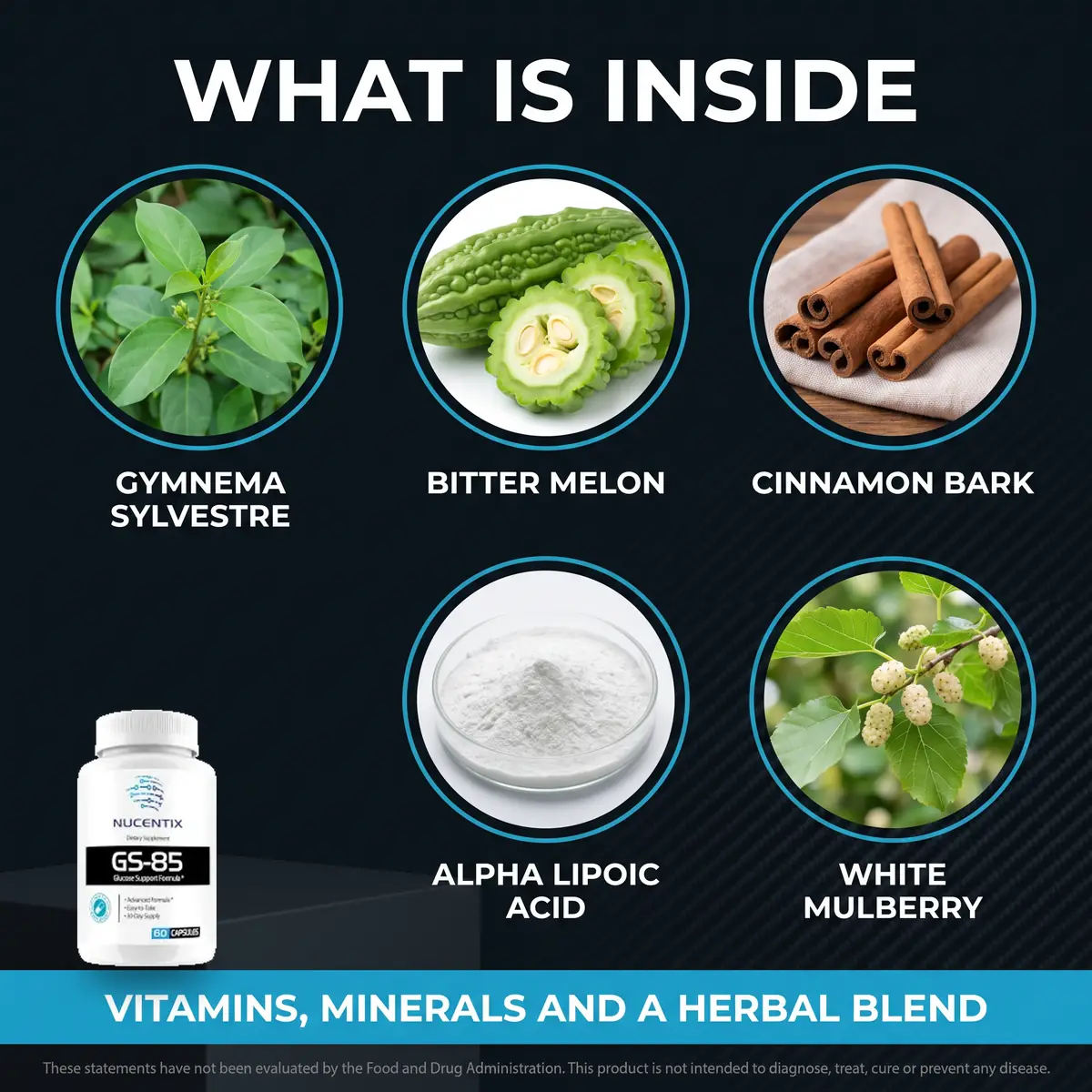
Alpha-lipoic acid for blood sugar is one of those ingredients that sounds highly technical but earns its place for a fairly intuitive reason: it is a potent, do-it-all antioxidant that also sits right at the crossroads of how your cells turn food into energy. That combination is why alpha-lipoic acid — usually shortened to ALA — has become a familiar name on glucose-support labels, including the herbal blend inside Nucentix GS-85. In this guide we cover what ALA actually is, how it is thought to work, the R-versus-S question that trips up a lot of shoppers, how much people typically take, and how to judge it on a label.
What is alpha-lipoic acid?
Alpha-lipoic acid is a naturally occurring compound, sometimes called thioctic acid, that your body synthesises in small quantities and that is also present in trace amounts in foods like organ meats, spinach, broccoli and tomatoes. Inside your cells, ALA plays a housekeeping role in the mitochondria — the tiny power plants where nutrients are converted into usable energy. It is a required helper molecule (a cofactor) for several enzymes involved in that energy-producing machinery, which is why it is fundamentally tied to metabolism.
What makes ALA especially interesting to supplement formulators, though, is its second job: it is a genuinely versatile antioxidant. Most antioxidants are either water-soluble (like vitamin C) or fat-soluble (like vitamin E), which limits where in the body they can operate. ALA is both, so it is often described as a “universal antioxidant” that can work in watery and fatty environments alike — inside cells and in the membranes around them.
What does alpha-lipoic acid do for blood sugar?
Here it is worth being careful and accurate. In the glucose-support context, alpha-lipoic acid is valued primarily for its antioxidant role. Normal metabolism — the everyday business of processing the food you eat — generates reactive molecules known as free radicals, and the resulting “oxidative stress” is a normal part of being alive. Antioxidants like ALA help the body keep that process in balance. Because carbohydrate metabolism is part of this everyday picture, an antioxidant that is active throughout the body is a natural companion in a formula aimed at supporting healthy glucose metabolism.
The antioxidant recycling angle
One of the most-cited features of ALA is its apparent ability to help regenerate other antioxidants after they have been “spent,” including vitamins C and E and the body’s own glutathione. Think of it as a support crew that keeps the rest of the antioxidant team in the game longer. This teamwork is part of why ALA is so often paired with vitamins C and E — a combination you will find reflected in the broader Nucentix GS-85 formula, which supplies vitamin C, vitamin E and zinc alongside its herbal blend.
To be clear and compliant: alpha-lipoic acid is included for general antioxidant and metabolic support and is studied in the context of healthy glucose metabolism. It is not a drug, not a cure, and not a treatment for diabetes or nerve conditions. If you are managing a medical issue, that is a conversation for your doctor.
Antioxidant support in a daily glucose formula
Nucentix GS-85 blends alpha-lipoic acid with chromium, biotin, cinnamon, gymnema and bitter melon — plus antioxidant vitamins C and E — in two easy capsules a day, backed by a 60-day guarantee.
See Nucentix GS-85 PackagesR-ALA vs S-ALA: what the letters mean
This is the detail that confuses the most shoppers, so let us make it simple. Alpha-lipoic acid is a “chiral” molecule, meaning it exists in two mirror-image versions — like your left and right hands. These are labelled R and S.
- ✓R-ALA is the form your body actually makes and uses. It is the biologically active, “natural” version.
- ✓S-ALA is a by-product created during chemical manufacturing and is not made by the body.
- ✓R/S-ALA (racemic) is a 50/50 mix of both. This is the standard, most widely available and most cost-effective form on the market, and it is what the bulk of ALA research has used.
Some premium products isolate pure R-ALA on the argument that it is the active half, but pure R-ALA is less stable and more expensive, and the large body of positive research was largely done with the racemic mix. The practical takeaway: standard R/S alpha-lipoic acid is a perfectly reasonable, well-studied choice, and seeing “alpha-lipoic acid” on a label without an R prefix is not a red flag.
How much alpha-lipoic acid, and when?
In research, ALA doses commonly fall between about 200 and 600 milligrams per day, sometimes split into smaller amounts. On timing, ALA is often suggested away from food — on an empty stomach or well before a meal — because there is evidence that food can blunt its absorption. That said, in a multi-ingredient formula built to be taken with food, the more important rule is consistency: take it the same way each day so your routine is steady. In Nucentix GS-85, alpha-lipoic acid appears within the proprietary herbal blend rather than as a stand-alone high-dose product, so it complements the chromium, biotin and botanicals rather than dominating the formula.
What to look for on a label
When scanning for ALA, check three things. First, is it simply listed as alpha-lipoic acid (racemic is fine) or specified as R-ALA if you specifically want the isolated natural form? Second, what does it sit alongside — a thoughtful glucose formula pairs ALA with chromium and antioxidant vitamins, not just filler. Third, is ALA inside a disclosed proprietary blend (common and legal) or listed with its own milligram figure? Both are legitimate; you just want to know which you are buying. For a complete method for decoding these panels — forms, blends and Daily Values — read our guide on how to read a blood sugar supplement label, and for the botanical side of the same formula see our overview of gymnema sylvestre benefits for blood sugar.
Stack antioxidant and mineral support daily
Stay consistent with the 3-bottle or 6-bottle package — the 6-bottle option is the best value and ships free within the U.S.
Order Nucentix GS-85† These statements have not been evaluated by the FDA. Nucentix GS-85 is not intended to diagnose, treat, cure or prevent any disease, and is not a treatment for diabetes. This article is for general information only and is not medical advice. If you take medication or manage a medical condition, talk to your doctor before starting any supplement.
Frequently asked questions
What does alpha-lipoic acid do for blood sugar?
Alpha-lipoic acid (ALA) is a compound the body makes in small amounts that acts as an antioxidant and helps enzymes turn food into energy. In the blood-sugar context it is valued mainly for supporting the body’s defence against everyday oxidative stress, which is why it appears in many glucose-support blends alongside chromium and botanicals.
What is the difference between R-ALA and S-ALA?
Alpha-lipoic acid comes in two mirror-image forms. R-ALA is the natural form your body produces and the more biologically active one, while S-ALA is created during manufacturing. Most standard supplements use a 50/50 blend of both, called racemic or R/S ALA; some premium products isolate R-ALA.
How much alpha-lipoic acid do people take?
Study and supplement doses of ALA commonly range from about 200 to 600 milligrams per day. In multi-ingredient glucose formulas, ALA is usually part of a proprietary blend rather than dosed at the very top of that range on its own.
When is the best time to take alpha-lipoic acid?
ALA is often suggested on an empty stomach or well before a meal because food may reduce its absorption. In a combination formula designed to be taken with food, the practical approach is to follow the product’s directions and stay consistent day to day.
Is alpha-lipoic acid an antioxidant?
Yes. ALA is often called a universal antioxidant because it is both water and fat soluble, letting it work throughout the body, and because it can help regenerate other antioxidants such as vitamins C and E. That antioxidant role is central to why it is included in everyday wellness and glucose-support formulas.
References
1. Oregon State University, Linus Pauling Institute, Micronutrient Information Center — Lipoic Acid. lpi.oregonstate.edu/mic/dietary-factors/lipoic-acid
2. National Institutes of Health, Office of Dietary Supplements — Antioxidants and Health. ods.od.nih.gov/factsheets
3. Shay KP, Moreau RF, Smith EJ, et al. — Alpha-lipoic acid as a dietary supplement: molecular mechanisms and therapeutic potential. Biochimica et Biophysica Acta, U.S. National Library of Medicine. ncbi.nlm.nih.gov/pmc/articles/PMC2756298
4. Mayo Clinic — Diabetes management: How lifestyle, daily routine affect blood sugar. mayoclinic.org/diabetes-management/art-20047963
About the Nucentix Research Team
The Nucentix Research Team is an independent group of nutrition and wellness writers focused on making supplement science readable. We work from primary literature and authoritative sources, cite them openly, and keep our language in the realm of general and traditional use — not medical advice. With ingredients like alpha-lipoic acid, our goal is to cut through the jargon (R versus S, racemic, chiral) so you can judge a formula on the things that actually matter: the form, the company it keeps, and whether it fits a consistent daily routine.