What Does Chromium Do for Blood Sugar? Dose, Forms & Label Guide
| What it is | Chromium is an essential trace mineral your body needs in tiny amounts to process carbohydrates and fats. |
| What it does for blood sugar | It appears to support insulin’s signalling, helping cells take up glucose — which is why it anchors most glucose-support formulas. |
| How much | Food intake sits near 20–35 mcg/day; supplements are more concentrated. GS-85 supplies 152 mcg (434% DV) per serving. |
| On the label | Look for an organic, absorbable form — picolinate or amino acid chelate — not a cheap inorganic oxide. |
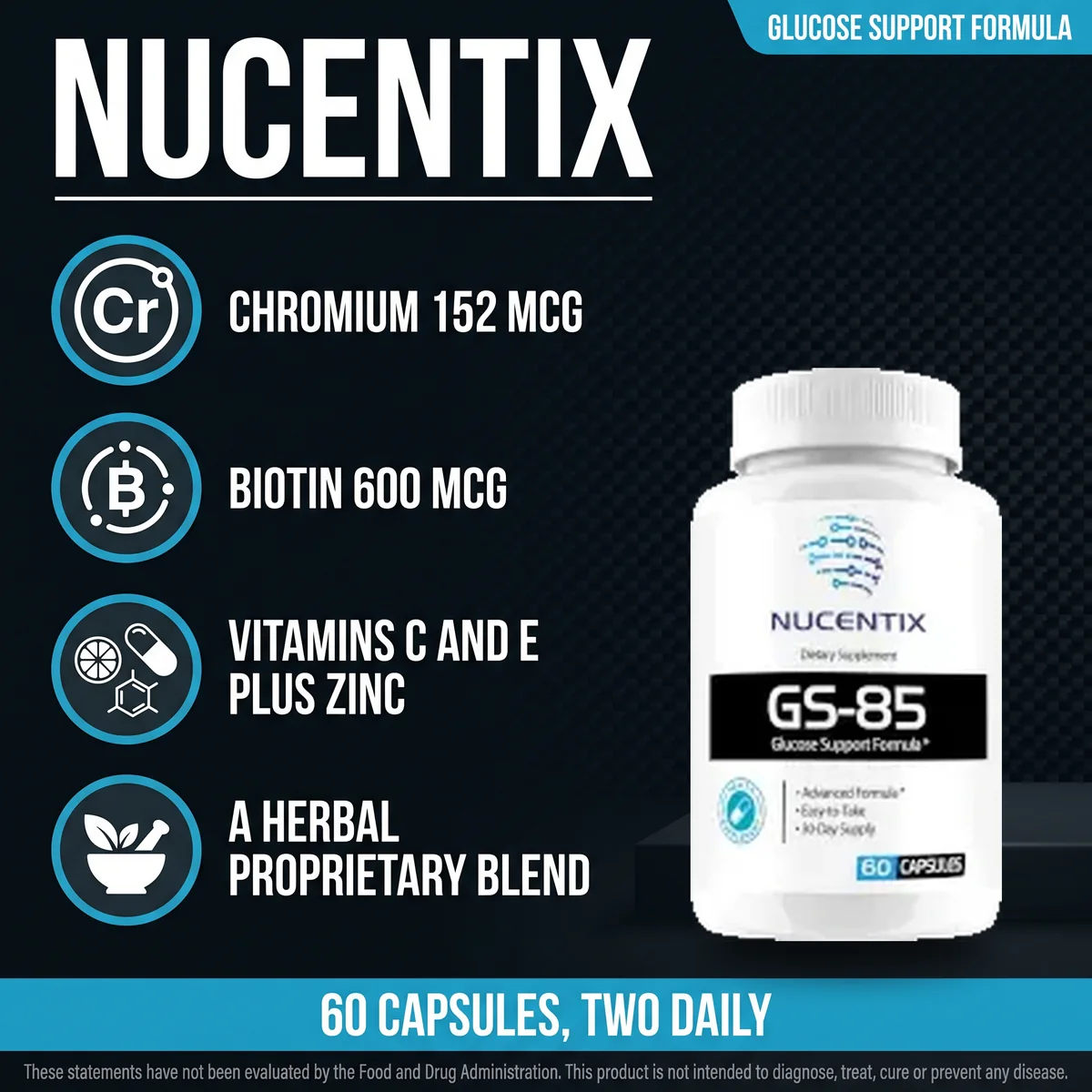
What does chromium do for blood sugar? In short: chromium is a trace mineral that helps your body do its everyday job of turning the carbohydrates on your plate into usable energy. It is not a stimulant, it is not a drug, and it will not override a diet built on sugary drinks and refined snacks. But it is one of the most consistently studied nutrients in the blood-sugar conversation, and it is the reason the mineral shows up on the front of so many glucose-support labels — including Nucentix GS-85. This guide explains what chromium actually is, the mechanism researchers believe it works through, how much you need, and how to read it on a supplement label so you are not paying for a form your body can barely absorb.
Chromium is an essential trace mineral — here is what that means
“Essential” in nutrition has a specific meaning: your body cannot make the nutrient itself, so it has to come from your diet. “Trace” means you need it in genuinely tiny amounts — micrograms, not milligrams or grams. Chromium ticks both boxes. The form that matters for nutrition is trivalent chromium (chromium-3), which is found naturally in foods and used in supplements. It is completely different from hexavalent chromium (chromium-6), the industrial pollutant — the two are not interchangeable, and dietary chromium is the harmless, food-based version.
Because the requirement is so small, chromium rarely gets the attention that headline nutrients like vitamin C or calcium do. Yet its role sits right at the centre of how your body handles fuel. When we talk about “normal macronutrient metabolism” on a supplement label, chromium is one of the nutrients that phrase is pointing to.
What does chromium do for blood sugar? The mechanism, in plain English
Here is the part most people actually want to understand. After you eat, carbohydrates are broken down into glucose, which enters your bloodstream. To keep blood sugar from climbing too high, your pancreas releases insulin — a hormone that acts like a key, unlocking your cells so glucose can move out of the blood and into the tissues that burn it.
The insulin-signalling connection
Chromium’s role appears to be behind the scenes of that unlocking process. Researchers have long described chromium as part of a mechanism that makes insulin’s signal work more smoothly at the cell surface. Older literature called this the “glucose tolerance factor,” and while the exact biochemistry has been refined over the decades — with attention now on a chromium-binding molecule sometimes called chromodulin — the general theme has held up: chromium supports the efficiency of insulin signalling rather than acting as a hormone itself. In other words, it does not force glucose down; it helps the body’s own system do its job.
Where the everyday benefit shows up
For a healthy adult, that translates into supporting steady glucose handling — the kind of even-keel energy that makes the mid-afternoon crash less dramatic. It is worth being precise and compliant here: chromium is studied for supporting healthy blood sugar that is already within a normal range, and for normal macronutrient metabolism. It is not a treatment for diabetes or any medical condition, and no responsible label should suggest otherwise. If you want the food-and-lifestyle side of the same story, our companion guide on how to support healthy blood sugar naturally covers the habits that do the heavy lifting.
How much chromium do you actually need?
Because no clear deficiency disease was ever defined for chromium in healthy people, authorities set an Adequate Intake (AI) rather than a full Recommended Dietary Allowance. For adults, that AI lands at roughly 20 to 35 micrograms per day, with men generally at the higher end and needs tapering slightly with age. That is the amount thought to cover basic nutritional requirements from a normal diet.
Supplements are a different story. Glucose-support formulas typically supply more concentrated amounts because they are aiming at targeted, everyday support rather than just filling a dietary gap. Nucentix GS-85 provides 152 mcg of chromium per two-capsule serving — 434% of the Daily Value — delivered as an amino acid chelate. Seeing a number well above 100% DV on a chromium line is normal and expected for this category; the Daily Value is a general reference point, not a ceiling, and trivalent chromium has a strong safety record at supplemental levels. As always, if you take medication or manage a health condition, check the dose with your doctor first.
Chromium plus a 12-herb blend, in two capsules
Nucentix GS-85 pairs 152 mcg of chromium and 600 mcg of biotin with cinnamon, gymnema, bitter melon and more — a focused daily glucose-support routine, backed by a 60-day guarantee.
See Nucentix GS-85 PackagesChromium picolinate vs amino acid chelate vs polynicotinate
This is where label-reading pays off, because the form of chromium changes how well your body can use it. Elemental chromium on its own is poorly absorbed, so reputable supplements bind it to a carrier molecule that carries it across the gut wall more effectively. The three you will see most often:
- ✓Chromium picolinate — chromium bound to picolinic acid. The most-studied supplemental form and a common default on glucose labels.
- ✓Chromium amino acid chelate — chromium bound to amino acids (the form used in Nucentix GS-85). A gentle, well-absorbed organic form.
- ✓Chromium polynicotinate — chromium bound to niacin (vitamin B3). Another absorbable organic option you will occasionally see.
The form to be wary of is plain, cheap inorganic chromium with no absorbable carrier, which the body utilises far less efficiently. When two products list the same microgram number, the one using a recognised organic form — picolinate, amino acid chelate or polynicotinate — is giving you a better shot at actually absorbing what you paid for.

What to look for on a blood sugar supplement label
Chromium is the anchor, but it rarely works alone, so scan the whole panel with a few questions in mind. First, is the chromium form named and absorbable? Second, is chromium paired with biotin? The two are commonly combined because biotin also supports normal energy-yielding metabolism, and the pairing is a signal that the formula was designed around glucose support rather than thrown together. Third, are there recognised supporting botanicals such as cinnamon bark, gymnema sylvestre and bitter melon? And finally, is the serving size honest — a two-capsule serving that clearly lists amounts is more transparent than vague “proprietary” claims with no numbers at all. For a full walk-through of reading these panels, see our dedicated guide on how to read a blood sugar supplement label.
Who tends to run low on chromium?
Chromium is found in broccoli, green beans, whole grains, nuts, and some meats and cheeses — but the amounts are small, and refining strips much of it out. Diets heavy in white bread, white rice, sugar and processed snacks tend to be low in chromium precisely when the body is being asked to process the most refined carbohydrate. Intense, frequent exercise and simply getting older can also nudge needs upward. None of this is a diagnosis; it is just context for why a measured daily dose appeals to many adults who want steady support without overhauling every meal at once.
Chromium is a team player, not a solo act
The most useful way to think about chromium is as the foundation of a broader glucose-support strategy rather than a magic bullet. It works best stacked with the fundamentals — protein and fibre at meals, a short walk after eating, decent sleep — and alongside complementary actives. In Nucentix GS-85 it sits beside biotin and a 12-herb blend that includes gymnema sylvestre, the “sugar destroyer”, cinnamon bark and bitter melon, plus antioxidant support from alpha-lipoic acid. Each plays a different, complementary role, which is exactly what you want from a well-built formula.

Make chromium part of your daily routine
The 3-bottle and 6-bottle packages keep you consistent so you never pause mid-routine — the 6-bottle option is the best value and ships free in the U.S.
Order Nucentix GS-85† These statements have not been evaluated by the FDA. Nucentix GS-85 is not intended to diagnose, treat, cure or prevent any disease, and is not a treatment for diabetes. This article is for general information only and is not medical advice. If you have a medical condition or take medication, talk to your doctor before starting any supplement.
Frequently asked questions
What does chromium do for blood sugar?
Chromium is an essential trace mineral that supports the body’s normal handling of macronutrients, including carbohydrates. Research suggests it works alongside insulin’s signalling, helping the hormone move glucose out of the bloodstream and into cells. That is why chromium is one of the most common ingredients in glucose-support formulas.
How much chromium is in a typical supplement?
The Adequate Intake for adults is roughly 20 to 35 micrograms a day from food, while blood-sugar supplements often supply more concentrated amounts. Nucentix GS-85, for example, provides 152 mcg of chromium per two-capsule serving, which is 434% of the Daily Value.
What is the difference between chromium picolinate and chromium amino acid chelate?
Both are absorbable organic forms of chromium designed to be better utilised than inorganic chromium salts. Picolinate binds chromium to picolinic acid, while an amino acid chelate binds it to amino acids. Both appear widely on glucose-support labels; the key is that the form is an organic, bioavailable one rather than a cheap oxide.
Can I get enough chromium from food?
Chromium is found in broccoli, whole grains, green beans, nuts and some meats, but the amounts are small and modern refined diets can fall short. That is one reason a measured dose in a supplement is popular, especially for adults who want steady, everyday support.
Does chromium replace diet and exercise for blood sugar?
No. Chromium is a supporting nutrient, not a substitute for the fundamentals. Balanced meals, movement, sleep and stress management do the heavy lifting; chromium and other actives are designed to complement those habits, not replace them.
References
1. National Institutes of Health, Office of Dietary Supplements — Chromium Fact Sheet for Health Professionals. ods.od.nih.gov/factsheets/Chromium-HealthProfessional
2. Oregon State University, Linus Pauling Institute, Micronutrient Information Center — Chromium. lpi.oregonstate.edu/mic/minerals/chromium
3. National Institutes of Health, Office of Dietary Supplements — Biotin Fact Sheet for Consumers. ods.od.nih.gov/factsheets/Biotin-Consumer
4. Harvard T.H. Chan School of Public Health, The Nutrition Source — Chromium. hsph.harvard.edu/nutritionsource/chromium
About the Nucentix Research Team
The Nucentix Research Team is an independent group of nutrition and wellness writers who review the science behind common blood-sugar ingredients and translate it into plain language. We read the primary sources, cite them openly, and keep our guidance general and traditional-use focused — never a substitute for personalised medical advice. Our aim is simple: help you become a sharper label-reader so your money goes toward formulas that are actually built to support healthy, everyday glucose metabolism.