Gymnema Sylvestre Benefits for Blood Sugar & Sugar Cravings
| What it is | Gymnema sylvestre is an Ayurvedic climbing herb whose leaves have been used around blood sugar for centuries. |
| Why “sugar destroyer” | Its Hindi name gurmar means “sugar destroyer” — chewing the leaf briefly blunts your ability to taste sweetness. |
| The active compounds | Gymnemic acids, which appear to interact with sweet-taste receptors and are studied for glucose support. |
| Best use | As one part of a blend — alongside chromium, cinnamon and bitter melon — not a stand-alone fix. |
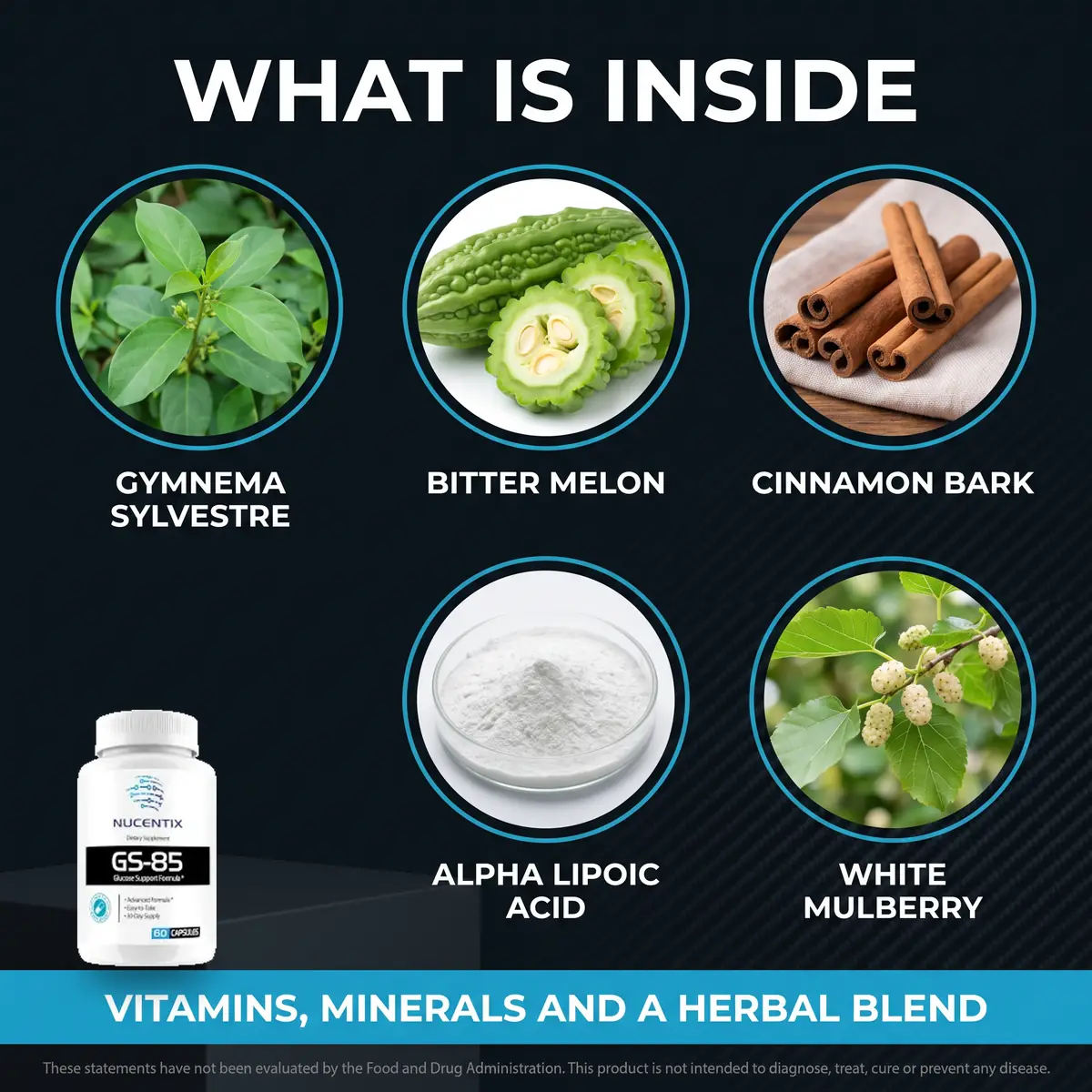
Of all the botanicals in the blood-sugar conversation, none has a nickname quite as memorable as gymnema sylvestre — the “sugar destroyer.” The gymnema sylvestre benefits for blood sugar that keep it on ingredient labels come down to two things: a long history of traditional use in Ayurvedic medicine, and a genuinely unusual party trick, where chewing the leaf makes sweet foods taste like almost nothing for a while. This guide unpacks what the plant is, the compounds behind its reputation, how it is thought to work, how much is typically used, and how to spot it done well on a supplement label — including in Nucentix GS-85.
What is gymnema sylvestre?
Gymnema sylvestre is a woody, climbing vine native to the tropical forests of India, Africa and Australia. Its leaves are the part used medicinally, and they have been a fixture of Ayurveda — the traditional medicine of the Indian subcontinent — for more than two thousand years. In Hindi the plant is called gurmar, which translates directly to “sugar destroyer” or “sugar killer.” That name is not marketing spin invented for the supplement aisle; it is centuries old, and it points to the plant’s two headline traditional uses: dampening the taste of sweetness, and supporting the body’s handling of sugar.
The “sugar destroyer” effect: gymnemic acids and your tongue
The most striking of the gymnema sylvestre benefits for blood sugar is the one you can experience within seconds. The leaves are rich in a family of compounds called gymnemic acids. When these come into contact with the tongue, they are thought to temporarily occupy the sweet-taste receptors — the very sensors that let you perceive sugar. For roughly the next 15 to 60 minutes, sweet foods taste dramatically less sweet. A spoon of sugar can taste like a spoon of sand; a square of chocolate loses much of its pull.
Why that matters for cravings
Cravings are driven in large part by reward — the anticipated hit of sweetness. Blunt that reward, even briefly, and the sugary snack becomes a lot easier to walk past. This is why some people take a gymnema-containing formula or lozenge before a meal or when a craving strikes: not because it magically deletes calories, but because it takes the shine off the very thing they were about to reach for. It is a behavioural nudge rooted in taste physiology, and it pairs neatly with the habit-based strategies in our guide on how to support healthy blood sugar naturally.
How gymnema is thought to support glucose metabolism
Beyond the tongue, researchers have long been interested in what gymnema may do further along the digestive tract. The proposed mechanisms, drawn from traditional use and laboratory and human studies, generally cluster around a few themes: the same gymnemic acids that bind sweet receptors on the tongue may also interact with sugar-absorbing structures in the intestine, potentially moderating how quickly some sugars are taken up after a meal; and gymnema has been studied for its role in supporting healthy insulin activity and the function of the cells that produce it. It is important to frame this accurately and compliantly: gymnema is traditionally used and studied for supporting healthy glucose metabolism that is already within a normal range. It is not a treatment for diabetes or any disease, and it is not a replacement for medical care.
Gymnema, in a 12-herb glucose blend
Nucentix GS-85 combines gymnema sylvestre with chromium, biotin, cinnamon bark and bitter melon — a focused, two-capsule daily routine backed by a 60-day money-back guarantee.
See Nucentix GS-85 PackagesHow much gymnema sylvestre do people take?
In studies and traditional practice, standardised gymnema leaf extract is commonly used in the range of a few hundred milligrams up to around one gram per day, frequently split across meals. Extracts are often standardised to a percentage of gymnemic acids so the active content is consistent from batch to batch. In a multi-ingredient product, though, gymnema is rarely dosed in isolation — it is one component of a blend chosen to work together. In Nucentix GS-85, gymnema sylvestre (leaf) sits within the proprietary herbal blend alongside cinnamon, bitter melon, banaba, alpha-lipoic acid and more, so it complements the mineral backbone of chromium and biotin rather than carrying the whole load.

What to look for on a label
When you are scanning a supplement facts panel for gymnema, a few markers separate a thoughtful formula from filler. First, check that gymnema is named as the leaf — the part with the tradition and the actives. Second, note the company it keeps: gymnema alongside chromium, biotin, cinnamon bark and bitter melon signals a formula purpose-built for glucose support rather than a random botanical grab-bag. Third, remember that many products list botanicals inside a proprietary blend, which discloses the total blend weight rather than each herb’s individual milligrams; that is normal and legal, but it means you are trusting the formulator’s ratios. If you want to get fluent in decoding these panels — blends, forms and Daily Values — read our full walkthrough on how to read a blood sugar supplement label.
Gymnema vs the other big blood-sugar botanicals
Gymnema often gets mentioned in the same breath as cinnamon, bitter melon and berberine, and it helps to know how it differs. Gymnema’s claim to fame is the taste effect and craving angle; cinnamon is the kitchen-cupboard classic reached for around glucose; bitter melon is a traditional South Asian fruit with its own glucose folklore; and berberine is a potent plant alkaloid that has become popular in its own right. If you are weighing two of the most-searched options against each other, our comparison of berberine vs cinnamon for blood sugar lays out where each one shines. And to understand the mineral that anchors most of these blends, see what chromium does for blood sugar. The practical takeaway is that these ingredients are complementary, not competing — which is exactly why good formulas combine several of them.

Ready to tame the sweet tooth?
Keep your routine consistent with the 3-bottle or 6-bottle package — the 6-bottle option is the best value and ships free within the U.S.
Order Nucentix GS-85† These statements have not been evaluated by the FDA. Nucentix GS-85 is not intended to diagnose, treat, cure or prevent any disease, and is not a treatment for diabetes. This article is for general information only and is not medical advice. If you are pregnant, nursing, take medication or manage a medical condition, talk to your doctor before starting any supplement.
Frequently asked questions
What is gymnema sylvestre and why is it called the sugar destroyer?
Gymnema sylvestre is a woody climbing plant native to India and Africa, used in Ayurveda for centuries. Its Hindi name, gurmar, literally means “sugar destroyer,” a nod to the way chewing the leaf temporarily blunts the ability to taste sweetness. That taste effect and its traditional use around blood sugar are why it earned the nickname.
How does gymnema help with sugar cravings?
Compounds in the leaf called gymnemic acids are thought to temporarily bind to the sweet-taste receptors on the tongue, so sugary foods taste less sweet and less rewarding for a short window. Many people use this taste trick to make it easier to say no to dessert or a sweet coffee.
How much gymnema sylvestre is typically used?
Traditional and study doses of standardised gymnema extract commonly fall in the range of a few hundred milligrams to around one gram per day, often split across meals. In multi-ingredient formulas it is usually part of a proprietary blend alongside chromium, cinnamon and bitter melon rather than dosed alone.
Is gymnema sylvestre safe to take?
Gymnema has a long history of traditional use and is generally well tolerated. Because it is used to support healthy glucose metabolism, anyone on blood-sugar medication, who is pregnant or nursing, or who manages a medical condition should speak with a doctor before use so their overall plan stays balanced.
Does gymnema work on its own?
Gymnema is best thought of as one supporting player. It is traditionally combined with chromium, cinnamon bark and bitter melon because each contributes a different angle on glucose support, and none replaces a balanced diet and regular movement.
References
1. National Center for Complementary and Integrative Health (NIH) — Herbs at a Glance. nccih.nih.gov/health/herbsataglance
2. Tiwari P, Mishra BN, Sangwan NS — Phytochemical and Pharmacological Properties of Gymnema sylvestre. BioMed Research International, U.S. National Library of Medicine. ncbi.nlm.nih.gov/pmc/articles/PMC3912882
3. Harvard T.H. Chan School of Public Health, The Nutrition Source — Carbohydrates and Blood Sugar. hsph.harvard.edu/nutritionsource/carbohydrates/carbohydrates-and-blood-sugar
4. Centers for Disease Control and Prevention — Manage Blood Sugar. cdc.gov/diabetes/managing/manage-blood-sugar.html
About the Nucentix Research Team
The Nucentix Research Team is an independent group of nutrition and wellness writers who dig into the science and tradition behind popular blood-sugar botanicals. We favour primary sources, cite them plainly, and keep every claim in the realm of general and traditional use rather than medical promises. If you take one thing from our gymnema coverage, let it be this: the “sugar destroyer” is a smart supporting player in a well-built blend — not a stand-in for the meals, movement and sleep that steady blood sugar in the first place.