Berberine vs Cinnamon for Blood Sugar: How Each Works & What to Look For
| Berberine | A concentrated plant alkaloid, taken in larger doses, studied for activating the energy-sensing enzyme AMPK. Potent, and can interact with medicines. |
| Cinnamon | A familiar culinary bark whose compounds are traditionally used for healthy glucose; gentle, well tolerated and easy to blend. |
| Which to pick | Different goals: berberine for a concentrated single ingredient; cinnamon for a gentle botanical that pairs with chromium and other herbs. |
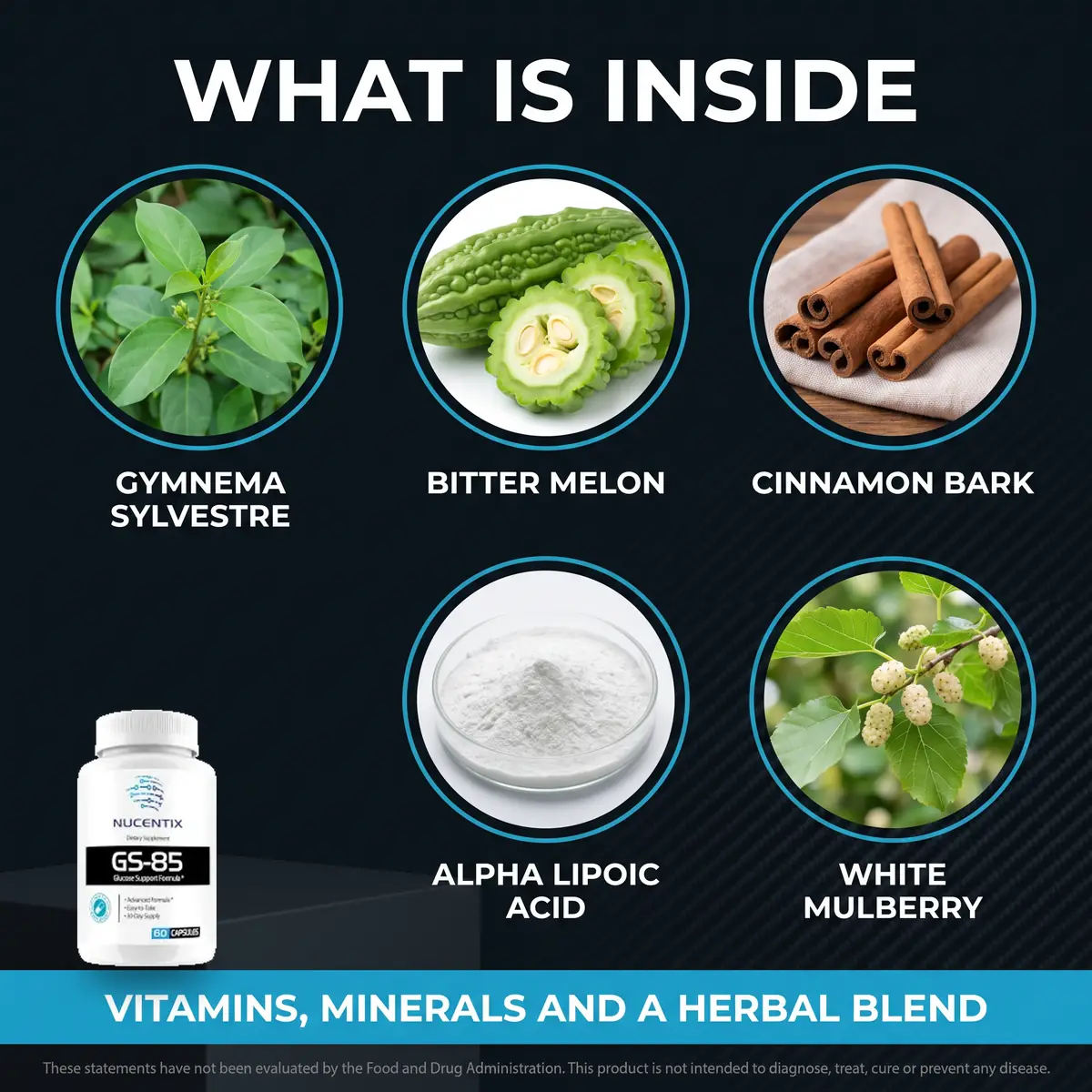
| In GS-85 | Cinnamon bark features in the Nucentix GS-85 herbal blend, alongside gymnema and bitter melon. |
Search the blood-sugar aisle and two ingredients come up again and again: berberine and cinnamon. They are often mentioned in the same sentence, yet they could hardly be more different — one is a potent, isolated plant alkaloid, the other is the warm spice in your kitchen cupboard. If you are trying to decide between them, the honest answer to berberine vs cinnamon for blood sugar is that they are not really rivals so much as tools for different jobs. This guide breaks down how each works, how they are dosed, the safety notes that matter, and how to spot them on a label — including where cinnamon fits inside Nucentix GS-85.
Meet the two contenders
Berberine is a bright-yellow alkaloid extracted from several plants, including goldenseal, barberry, Oregon grape and the herb Coptis used in traditional Chinese medicine. It is not a spice you would cook with — it is a concentrated compound, usually sold as a stand-alone supplement in capsules of several hundred milligrams. Over the last decade it has become one of the most talked-about natural ingredients in the metabolic-wellness world.
Cinnamon needs no introduction: it is the ground bark of the Cinnamomum tree, a culinary staple for thousands of years, and one of the most-reached-for kitchen botanicals when people think about blood sugar. In supplements it usually appears as cinnamon bark powder or extract, and it is frequently one of several herbs in a broader glucose-support blend rather than a solo act.
How berberine is thought to work
The mechanism that made berberine famous centres on an enzyme called AMPK — adenosine monophosphate-activated protein kinase — sometimes nicknamed the body’s “metabolic master switch.” AMPK acts as a fuel gauge inside cells: when it is activated, it signals cells to take up and use energy more actively. Berberine appears to nudge AMPK into action, and researchers have studied how that may relate to the way the body handles glucose and lipids. Because it is concentrated and biologically active, berberine tends to be studied at meaningful doses and taken deliberately, often split across the day with meals.
How cinnamon is thought to work
Cinnamon takes a gentler, more traditional route. Its bark contains polyphenol compounds — including a much-discussed one often abbreviated as MHCP — that have been studied for how they may support insulin’s everyday signalling and healthy glucose metabolism. In traditional use, cinnamon is simply the familiar spice people add around meals, and in supplements it contributes a well-tolerated botanical with a long culinary safety history. It will not overwhelm a formula, which is exactly why it partners so well with a mineral like chromium and craving-focused herbs like gymnema sylvestre.
Cinnamon in a balanced 12-herb blend
Nucentix GS-85 puts cinnamon bark alongside chromium, biotin, gymnema and bitter melon — a gentle, everyday glucose-support routine in two capsules a day, backed by a 60-day guarantee.
See Nucentix GS-85 PackagesBerberine vs cinnamon: the practical differences
Set side by side, a few contrasts stand out:
- ✓Potency and dose. Berberine is potent and taken in larger, deliberate doses; cinnamon is gentle and used in smaller culinary-scale amounts.
- ✓Tolerability. Berberine can cause digestive upset in some people and, importantly, may interact with a number of medications. Cinnamon is generally well tolerated with a long food history.
- ✓Blend-friendliness. Cinnamon slots naturally into multi-ingredient formulas; high-dose berberine is usually taken on its own.
- ✓Research profile. Berberine has a growing, high-interest research base as a single agent; cinnamon has a long traditional record and supportive studies as part of everyday nutrition.
None of this makes one “win.” If you want a concentrated, single-ingredient approach and you are willing to check for drug interactions with your doctor, berberine is the ingredient people gravitate to. If you prefer a gentle, food-familiar botanical that layers neatly with chromium, gymnema and antioxidants, cinnamon is the natural pick — and it is why cinnamon, not berberine, is the herb you will find in most balanced glucose blends.
The bioavailability question
One reason the two ingredients are dosed so differently comes down to absorption. Berberine is notoriously poorly absorbed on its own — a large fraction of an oral dose never makes it into circulation intact, which is part of why effective study doses are so high and why it is usually split into two or three servings across the day rather than taken all at once. Some products pair berberine with absorption enhancers to work around this. Cinnamon faces no such hurdle in the same way: it is a food ingredient the body has handled for millennia, and in a supplement it contributes a gentle, well-tolerated dose that does not need heroic amounts to sit comfortably in a blend. This practical difference — a potent-but-hard-to-absorb isolate versus an easy, food-familiar botanical — is a big reason balanced formulas lean on cinnamon and reserve berberine for stand-alone, deliberately dosed products.
A word on cinnamon type: Ceylon vs Cassia
If you go the cinnamon route, one detail is worth knowing. There are two main kinds: Cassia cinnamon (the common, inexpensive, strongly flavoured type found in most supermarkets) and Ceylon cinnamon (often called “true” cinnamon). The distinction matters because Cassia contains more coumarin, a naturally occurring compound that is best not consumed in very large daily amounts over long periods. Ceylon is much lower in coumarin. For occasional culinary use this is rarely a concern, but for daily supplementation it is a reasonable thing to check on a label, along with the amount used.
What to look for on a label
Whichever ingredient interests you, apply the same label discipline. For cinnamon, look for the part used (bark), ideally the type (Ceylon or Cassia), and whether it sits inside a sensible blend with chromium, biotin and complementary botanicals. For berberine, check the actual milligram dose and the source plant, and take the interaction warnings seriously. And in either case, be clear on whether ingredients are individually dosed or grouped inside a disclosed proprietary blend. Our full method for reading these panels is in the guide on how to read a blood sugar supplement label, and the habit side of the equation is covered in how to support healthy blood sugar naturally.
Prefer a gentle, blended approach?
Nucentix GS-85 keeps cinnamon in a balanced blend — stay consistent with the 3-bottle or 6-bottle package, the best value and free U.S. shipping on six.
Order Nucentix GS-85† These statements have not been evaluated by the FDA. Nucentix GS-85 is not intended to diagnose, treat, cure or prevent any disease, and is not a treatment for diabetes. This article is for general information only and is not medical advice. Berberine in particular can interact with medications — talk to your doctor before starting any supplement.
Frequently asked questions
What is the difference between berberine and cinnamon for blood sugar?
Berberine is a concentrated plant alkaloid taken in fairly large doses and studied for activating an energy-sensing enzyme called AMPK. Cinnamon is a culinary spice whose bark compounds are traditionally used to support healthy glucose and are typically taken in smaller amounts. Berberine is the more potent, more research-heavy single actor; cinnamon is the gentle, food-familiar option often used in blends.
Which is better, berberine or cinnamon?
Neither is universally better; they suit different goals. Berberine appeals to people wanting a concentrated single ingredient, while cinnamon fits those who prefer a gentle, well-tolerated botanical that blends easily with other glucose-support ingredients like chromium and gymnema. Many formulas simply include cinnamon as one of several complementary actives.
What kind of cinnamon is used for blood sugar?
Two main types appear on labels: Ceylon (true cinnamon) and Cassia. Cassia is more common and stronger tasting but contains more coumarin, a compound best limited in large daily amounts. Ceylon is lower in coumarin. For everyday supplement use, the source and amount are worth checking on the label.
Can you take berberine and cinnamon together?
They are different ingredients and are not mutually exclusive, but berberine can interact with medications and is quite potent, so combining supplements should be discussed with a doctor. Many glucose-support formulas favour cinnamon within a balanced multi-herb blend rather than high-dose berberine on its own.
Is cinnamon in Nucentix GS-85?
Yes. Cinnamon bark is one of the botanicals in the Nucentix GS-85 proprietary herbal blend, alongside gymnema sylvestre, bitter melon, banaba and white mulberry, with chromium and biotin forming the mineral and vitamin backbone.
References
1. National Center for Complementary and Integrative Health (NIH) — Cinnamon. nccih.nih.gov/health/cinnamon
2. National Center for Complementary and Integrative Health (NIH) — Goldenseal (a source of berberine). nccih.nih.gov/health/goldenseal
3. U.S. National Library of Medicine (PubMed) — Berberine and metabolic function: mechanisms and AMPK. pubmed.ncbi.nlm.nih.gov
4. Harvard T.H. Chan School of Public Health, The Nutrition Source — Carbohydrates and Blood Sugar. hsph.harvard.edu/nutritionsource/carbohydrates/carbohydrates-and-blood-sugar
About the Nucentix Research Team
The Nucentix Research Team is an independent group of nutrition and wellness writers who compare popular blood-sugar ingredients on the evidence, not the hype. We cite authoritative sources, keep our language to general and traditional use, and flag safety considerations — like berberine’s drug interactions — honestly. Our view on berberine vs cinnamon is simple: they answer different questions, and a well-built formula usually reaches for the gentle, blend-friendly option and layers it with complementary minerals and botanicals.