Ceylon vs Cassia Cinnamon for Blood Sugar: Coumarin, Dose & Which to Choose
| The two types | Ceylon (“true cinnamon,” Cinnamomum verum) is mild and low in coumarin; Cassia is the common, bold grocery cinnamon and is high in coumarin. |
| For blood sugar | Both contain the compounds studied for glucose support; most famous studies used Cassia. Cinnamon supports healthy blood sugar already in range — it is not a treatment. |
| Why it matters | Coumarin can burden the liver in large amounts. Europe’s tolerable daily intake is ~0.1 mg/kg body weight, which a few grams of Cassia can approach. |
| On the label | Look for the type (Ceylon if you use it daily), the part used (bark), the dose, and whether it is a water-based extract. |
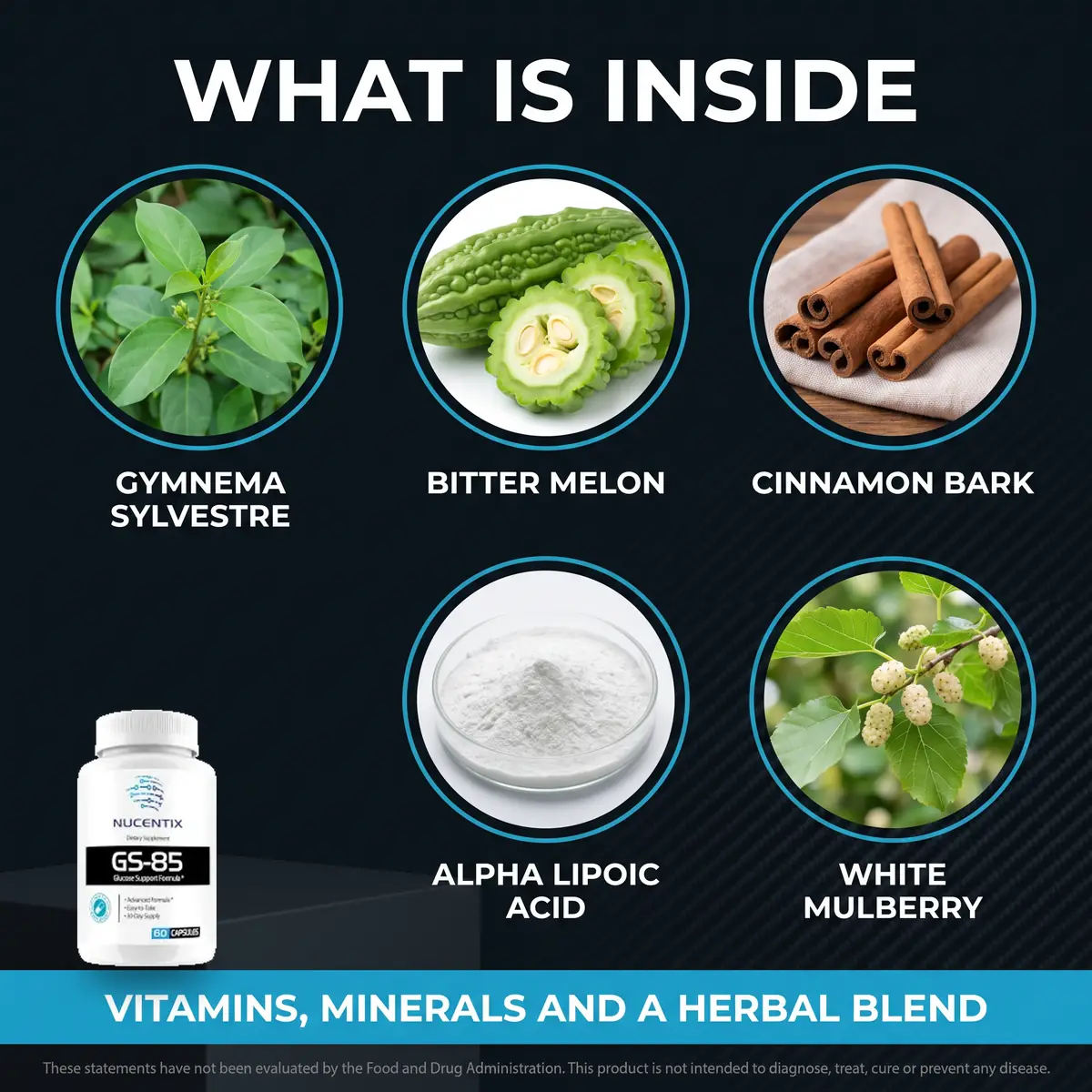
Ceylon vs Cassia cinnamon for blood sugar is one of those questions that sounds like splitting hairs until you learn what actually separates the two. They are not the same spice with different labels — they come from different trees, taste different, and differ enormously in one compound that matters for anyone planning to take cinnamon every day. Cinnamon bark is one of the most-searched culinary botanicals in the blood-sugar world, and it anchors the herbal side of many glucose formulas, including Nucentix GS-85. This guide explains how the two types differ, which compounds researchers have studied for glucose, why coumarin is the deciding factor for daily use, how much cinnamon studies have used, and how to read the cinnamon line on a supplement label.
Two different trees, one familiar spice
“Cinnamon” is a category, not a single plant. The ground cinnamon in most kitchen cupboards, and in the majority of baked goods, is Cassia cinnamon — usually Cinnamomum cassia (also sold as Chinese cinnamon) or the closely related Indonesian and Saigon varieties. It is bold, sweet-hot, inexpensive, and has a thick, hard bark that curls into a single tight roll.
Ceylon cinnamon (Cinnamomum verum, literally “true cinnamon”) comes mainly from Sri Lanka and southern India. Its bark is thin and papery, rolling up into fragile, layered quills the colour of a light tan cigar. The flavour is more delicate, floral and citrusy, with less of the fiery punch of Cassia. It is also pricier, which is exactly why the cheaper Cassia dominates supermarket shelves. Both belong to the same botanical family and share a similar core chemistry — but the amounts of certain compounds differ sharply, and that difference is the whole story.
How cinnamon is studied for blood sugar: the mechanism
Cinnamon has a long traditional-use history and a substantial body of modern research exploring its role in healthy glucose metabolism. A few compounds get most of the attention.
Cinnamaldehyde and water-soluble polyphenols
The compound that gives cinnamon its signature smell and taste is cinnamaldehyde, and it is one of the actives researchers have examined for metabolic effects. Alongside it, cinnamon contains a group of water-soluble polyphenol polymers — sometimes referred to in the literature by names like type-A procyanidins or MHCP — that have been studied for their interaction with insulin signalling. In laboratory and human studies, cinnamon has been explored for supporting the body’s normal handling of glucose after meals and for supporting healthy insulin sensitivity that is already within a normal range. Some research also points to cinnamon slowing the rate at which the stomach empties, which can smooth the post-meal glucose curve.
What the research does and does not say
It is important to be precise and compliant here. The human research on cinnamon is genuinely interesting but also mixed, with results varying by dose, type of cinnamon and study design. Cinnamon is best understood as a traditional-use botanical that may support healthy blood sugar already within a normal range — not a treatment, cure or replacement for medical care for any condition. If you want to see how cinnamon stacks up against another heavily searched ingredient, our comparison of berberine vs cinnamon for blood sugar looks at their different mechanisms side by side.
Cinnamon bark plus a full glucose blend
Nucentix GS-85 pairs cinnamon bark with gymnema, bitter melon, chromium, biotin and more — a focused daily glucose-support routine, backed by a 60-day guarantee.
See Nucentix GS-85 PackagesCoumarin: the compound that separates Ceylon from Cassia
Here is the crux of the whole Ceylon-versus-Cassia question. Coumarin is a naturally occurring aromatic compound found in cinnamon — and the two types are worlds apart in how much they contain. Cassia cinnamon is comparatively high in coumarin; Ceylon contains only trace amounts. That matters because, in high enough doses over long periods, coumarin can burden the liver in sensitive individuals.
European food-safety authorities set a tolerable daily intake (TDI) for coumarin of about 0.1 mg per kilogram of body weight. For a 60 kg adult, that is roughly 6 mg of coumarin a day. Because Cassia can carry a meaningful amount of coumarin per gram, regularly consuming a few grams of Cassia powder daily — whether by the spoonful or in supplement form — can approach or exceed that guideline. Ceylon’s trace coumarin makes it the easier choice for anyone taking cinnamon frequently and at higher amounts.
None of this means an occasional sprinkle of grocery cinnamon on your oatmeal is a problem — it is not. The coumarin question becomes relevant specifically when cinnamon is taken every day, at supplement-level or spoonful amounts, over months. That is the exact scenario a blood-sugar routine involves, which is why the type matters more here than in casual cooking.
How much cinnamon is used for blood sugar?
There is no single official dose for cinnamon, and this is where a lot of confusion lives. Human studies have used a broad range of whole cinnamon powder, commonly landing somewhere around 1 to 6 grams per day, with much of the best-known work using Cassia. Supplements, by contrast, frequently use concentrated extracts dosed in milligrams rather than grams, and water-based extracts are designed to capture the water-soluble polyphenols while leaving most of the fat-soluble coumarin behind — a neat way to reduce coumarin exposure while keeping the studied actives.
The practical upshot: whole-powder gram doses and extract milligram doses are not directly comparable, so do not assume a bigger milligram number is stronger. What you want is a named type, an honest amount and, ideally, clarity on whether it is a whole powder or an extract. For a broader framework on decoding these numbers, see our guide on how to read a blood sugar supplement label.
Ceylon vs Cassia: which should you choose?
Put simply:
- ✓Choose Ceylon if you plan to take cinnamon daily at higher amounts and want the widest coumarin safety margin. It is the “true cinnamon” and the gentler long-term option.
- ✓Cassia is fine for occasional culinary use and is the type behind much of the well-known research — just keep an eye on total daily coumarin if you use it heavily.
- ✓A water-based extract can be a smart middle path, aiming to deliver the studied polyphenols with reduced coumarin regardless of the source bark.
Whichever you choose, cinnamon works best as one part of a broader routine rather than a stand-alone fix — a theme that runs through every ingredient in a well-built formula.
Cinnamon is a team player, not a solo act
The most useful way to think about cinnamon is as one botanical in a coordinated blend rather than a magic bullet. It works best stacked with the fundamentals — protein and fibre at meals, a short walk after eating, decent sleep — and alongside complementary actives. In Nucentix GS-85, cinnamon bark sits beside gymnema sylvestre, bitter melon, banaba and white mulberry, plus the trace mineral chromium and the B-vitamin biotin. Each plays a different, complementary role, which is exactly what you want from a formula designed around glucose metabolism. For the food-and-lifestyle foundation underneath all of it, see how to support healthy blood sugar naturally.
Make cinnamon part of your daily routine
The 3-bottle and 6-bottle packages keep you consistent so you never pause mid-routine — the 6-bottle option is the best value and ships free in the U.S. Or see current pricing on the official store.
Order Nucentix GS-85† These statements have not been evaluated by the FDA. Nucentix GS-85 is not intended to diagnose, treat, cure or prevent any disease, and is not a treatment for diabetes. This article is for general information only and is not medical advice. If you have a medical condition or take medication, talk to your doctor before starting any supplement.
Frequently asked questions
What is the difference between Ceylon and Cassia cinnamon?
Ceylon cinnamon (Cinnamomum verum, or “true cinnamon”) comes mainly from Sri Lanka and is mild, light and low in coumarin. Cassia cinnamon (usually Cinnamomum cassia) is the common, bolder-tasting cinnamon found in most grocery jars and is much higher in coumarin, a natural compound that can stress the liver in large amounts over time.
Which cinnamon is better for blood sugar, Ceylon or Cassia?
Most of the well-known blood-sugar research used Cassia cinnamon, and both types contain the compounds studied for glucose support. For frequent, higher-dose daily use, many people prefer Ceylon because its very low coumarin content gives a wider safety margin. Both are traditional-use ingredients that support healthy blood sugar already in a normal range rather than treating any condition.
Why does coumarin matter in cinnamon?
Coumarin is a naturally occurring compound abundant in Cassia cinnamon but present only in trace amounts in Ceylon. In high amounts over long periods it can burden the liver, so European food-safety authorities set a tolerable daily intake of about 0.1 mg per kilogram of body weight. A few grams of Cassia a day can approach or exceed that, which is why the type and dose of cinnamon matter.
How much cinnamon is used for blood sugar support?
Studies have used a wide range, commonly around 1 to 6 grams of cinnamon powder per day, while supplements often use concentrated extracts at lower milligram doses. There is no single official dose. On a label, look for the type of cinnamon, the part used (bark) and the amount, and keep coumarin exposure in mind if you use Cassia daily.
Is the cinnamon in a glucose supplement Ceylon or Cassia?
It varies by product, and not every label specifies. Cinnamon bark is a common blend ingredient because it is one of the most-studied culinary botanicals for blood sugar. If daily coumarin exposure concerns you, look for a label that names Ceylon or uses a water-based extract, and factor in the total across your whole diet.
References
1. National Center for Complementary and Integrative Health (NIH) — Cinnamon: What You Need To Know. nccih.nih.gov/health/cinnamon
2. European Food Safety Authority (EFSA) — Coumarin in flavourings and other food ingredients: tolerable daily intake. efsa.europa.eu — coumarin TDI
3. German Federal Institute for Risk Assessment (BfR) — Consumers who eat a lot of cinnamon currently have an overly high exposure to coumarin. bfr.bund.de — cinnamon and coumarin
4. Harvard T.H. Chan School of Public Health, The Nutrition Source — Cinnamon. hsph.harvard.edu/nutritionsource/food-features/cinnamon
About the Nucentix Research Team
The Nucentix Research Team is an independent group of nutrition and wellness writers who review the science behind common blood-sugar ingredients and translate it into plain language. We read the primary sources, cite them openly, and keep our guidance general and traditional-use focused — never a substitute for personalised medical advice. Our aim is simple: help you become a sharper label-reader so your money goes toward formulas that are actually built to support healthy, everyday glucose metabolism.