Does Zinc Help With Blood Sugar? How the Mineral Supports Insulin
| What it is | Zinc is an essential trace mineral involved in hundreds of enzyme reactions across the body. |
| What it does for blood sugar | The pancreas uses zinc to make, store and release insulin, and zinc supports antioxidant defences — central roles in normal carbohydrate metabolism. |
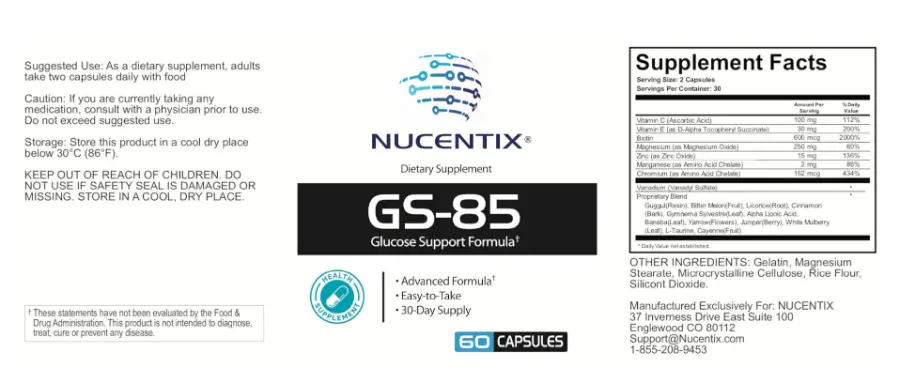
| How much | The adult RDA is 8–11 mg/day; the upper limit is 40 mg. GS-85 supplies 15 mg (136% DV) per serving. |
| On the label | Check the form (oxide, citrate, gluconate, picolinate, bisglycinate) and keep your daily total under 40 mg. |
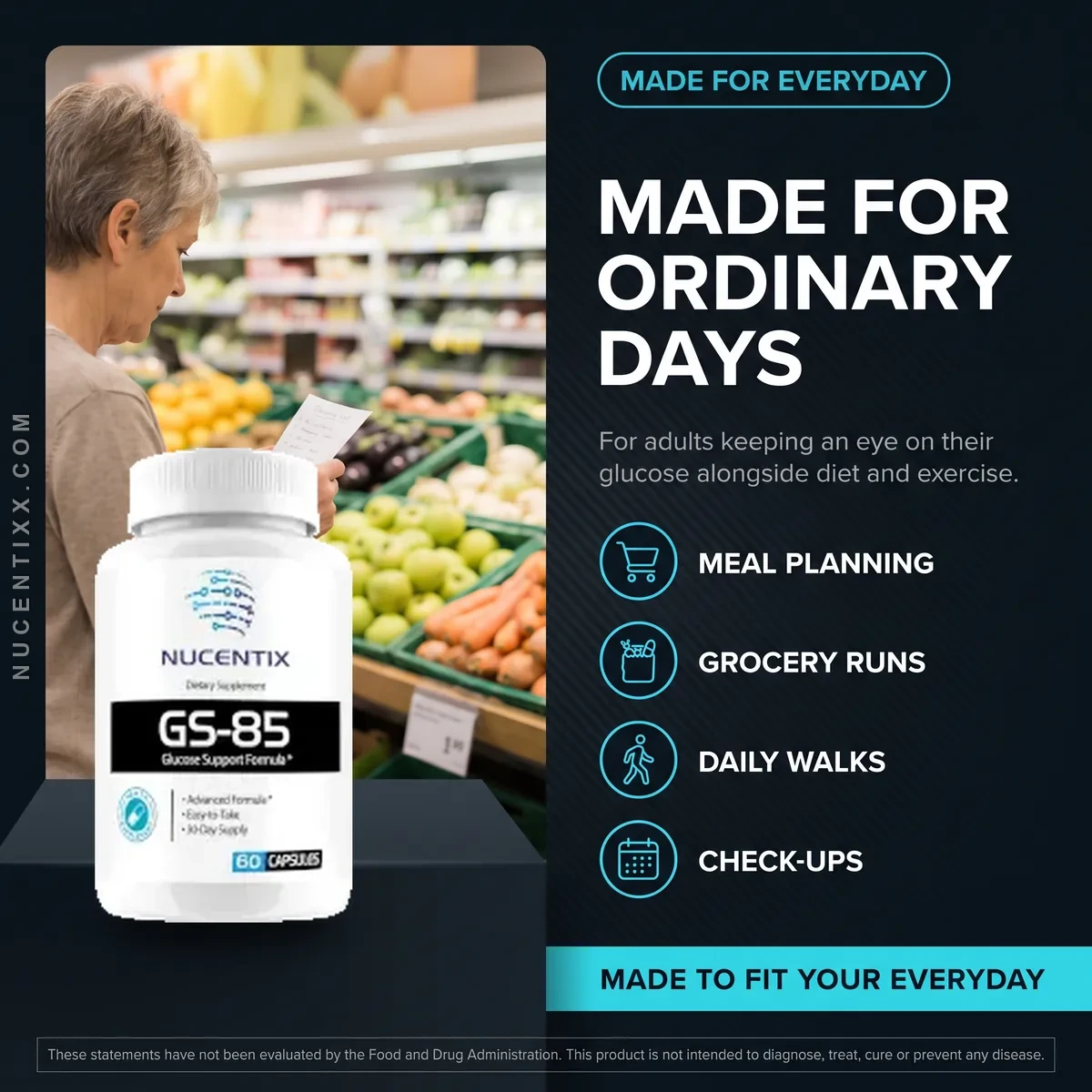
Does zinc help with blood sugar? The short answer is that zinc plays a genuinely central role in how your body handles glucose — not as a stimulant or a drug, but as a nutrient your pancreas literally cannot make insulin without. Zinc rarely gets top billing the way chromium or cinnamon do, yet it quietly turns up on the ingredient panels of many glucose-support formulas — including Nucentix GS-85 — precisely because of that behind-the-scenes importance. This guide explains what zinc is, the mechanism researchers connect to blood sugar, how much you actually need, why the upper limit matters, and how to read the zinc line on a supplement label so you get an absorbable form at a sensible dose.
Zinc is an essential trace mineral — here is what that means
“Essential” means your body cannot manufacture zinc, so it must come from your diet. “Trace” means you need it in small amounts — milligrams per day, not grams. Do not let the small requirement fool you into thinking it is a minor player: zinc is a cofactor for hundreds of enzymes and is involved in immune function, wound healing, taste, DNA synthesis, and the everyday metabolism of the food you eat. Unlike some nutrients, the body has no large storage depot for zinc, so a steady daily supply keeps the system running smoothly.
Because zinc is spread across so many jobs, its role in blood-sugar handling is easy to overlook. But that role is one of the clearest and most direct of any mineral, which is why it earns a place on a well-designed glucose panel alongside chromium and biotin.
Does zinc help with blood sugar? The mechanism, in plain English
Here is the part most people want to understand. Zinc’s connection to blood sugar comes down to insulin — the hormone that lets your cells take glucose out of the bloodstream after a meal. Zinc is tied to insulin at almost every stage of its life.
Insulin is stored and secreted with zinc
Inside the beta cells of your pancreas, insulin is not floating around loose. It is packaged and stored in tiny granules where insulin molecules cluster together around zinc ions, forming stable zinc-insulin crystals. When your blood sugar rises after eating, those granules release their contents. In other words, zinc is part of the physical architecture that lets the pancreas store insulin efficiently and release it on cue. Researchers have long studied this relationship, and it is the main reason zinc is described as supporting normal carbohydrate metabolism.
Zinc also supports antioxidant defences
Zinc has a second, complementary job that fits the blood-sugar picture: it is a structural part of superoxide dismutase, one of the body’s key antioxidant enzymes. Everyday metabolism generates reactive by-products, and antioxidant support helps the body keep that in balance. This is the same broad theme you see with alpha-lipoic acid, vitamin C and vitamin E, which is why those nutrients often appear together in a glucose formula. To be precise and compliant: zinc is studied in the context of normal metabolism and supporting healthy blood sugar that is already within a normal range. It is not a treatment for diabetes or any medical condition, and no responsible label should suggest otherwise.
How much zinc do you actually need?
For zinc, authorities set a full Recommended Dietary Allowance (RDA): roughly 11 mg per day for adult men and 8 mg for adult women, with slightly higher needs in pregnancy and breastfeeding. Just as important for supplement users is the Tolerable Upper Intake Level of 40 mg per day for adults from all sources combined — the ceiling above which routine intake is not advised without medical supervision.
Supplements typically supply a moderate amount that respects both numbers. Nucentix GS-85 provides 15 mg of zinc per two-capsule serving — 136% of the Daily Value, delivered as zinc oxide. That sits comfortably above the RDA (useful as everyday support) and well below the 40 mg upper limit, leaving room for the zinc you also get from food. As always, if you take medication or already use a separate zinc supplement, add up your total and check with your doctor.
Zinc, chromium and a 12-herb blend, in two capsules
Nucentix GS-85 pairs 15 mg of zinc with chromium, biotin, vitamins C and E and a botanical glucose blend — focused daily support, backed by a 60-day guarantee.
See Nucentix GS-85 PackagesZinc oxide vs citrate vs picolinate vs bisglycinate: reading the form
Like most minerals, elemental zinc is bound to a carrier that affects how readily the body absorbs it, and the form is spelled out on the label. The ones you will meet most often:
- ✓Zinc oxide — economical and widely used (the form in Nucentix GS-85). It supplies a high percentage of elemental zinc by weight and is a common choice in multi-ingredient formulas.
- ✓Zinc citrate — bound to citric acid; frequently cited for good absorption and a neutral taste.
- ✓Zinc gluconate — a familiar form used in many lozenges and everyday supplements.
- ✓Zinc picolinate / bisglycinate — chelated forms often marketed for enhanced bioavailability.
There is no single “best” form for everyone, and total dose and consistency matter more than chasing a marginally higher absorption figure. What you want to avoid is an unnamed “zinc” with no form listed at all, or a dose that pushes your daily total past the 40 mg ceiling. For a broader walk-through of forms, %DV and proprietary blends, see our guide on how to read a blood sugar supplement label.
The zinc-copper balance: one caution worth knowing
Here is the single most practical thing to understand about supplemental zinc. Zinc and copper compete for absorption in the gut, so high doses of zinc taken over long periods can lower copper levels and lead to a copper deficiency. This is exactly why the 40 mg upper limit exists and why moderate doses are the norm in blood-sugar formulas. A supplemental dose like 15 mg is well within the safe range and unlikely to disturb copper for most people. The caution matters mainly if you stack several products — a multivitamin, a separate high-dose zinc pill, and a glucose formula — without adding up the total. When in doubt, tally your day and keep it under 40 mg unless a clinician advises otherwise.
Food sources of zinc — and who tends to run low
Zinc is found in oysters (by far the richest source), red meat, poultry, crab and other shellfish, plus beans, chickpeas, nuts, pumpkin seeds, dairy and whole grains. There is a catch with plant sources: they contain compounds called phytates that bind zinc and reduce how much you absorb, so people eating mostly plant-based diets may absorb less than the raw numbers suggest. Older adults, people with certain digestive conditions, and heavy drinkers can also run lower. None of this is a diagnosis; it is context for why a measured daily dose appeals to many adults who want steady support without overhauling every meal.
Zinc is a team player, not a solo act
The most useful way to think about zinc is as one member of a broader glucose-support strategy rather than a stand-alone answer. It works best stacked with the fundamentals — protein and fibre at meals, a short walk after eating, decent sleep — and alongside complementary actives. In Nucentix GS-85 it sits beside chromium, biotin and a 12-herb blend that includes gymnema sylvestre, cinnamon bark and bitter melon, plus antioxidant support from vitamins C and E. Each nutrient plays a different, complementary role, which is exactly what you want from a well-built formula.
If you are comparing products, do not be swayed by a zinc dose that looks impressively large — more is not better here, and past a point it works against you by displacing copper. The smarter check is a named, absorbable form at a sensible dose, sitting in a formula that pairs it with the other nutrients your body uses to handle glucose.
Make zinc part of your daily routine
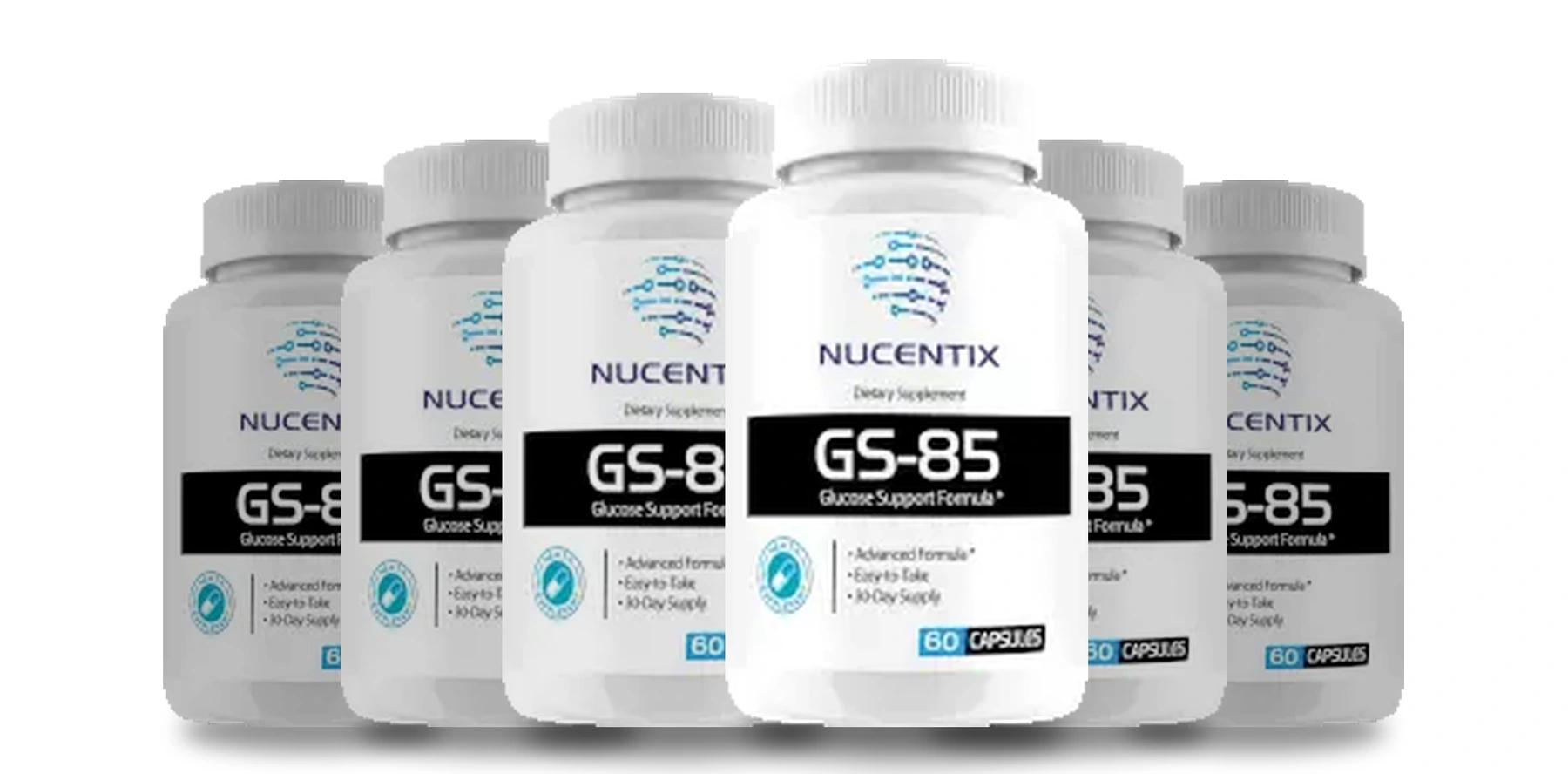
The 3-bottle and 6-bottle packages keep you consistent so you never pause mid-routine — the 6-bottle option is the best value and ships free in the U.S. Or check current pricing on the official store.
Order Nucentix GS-85† These statements have not been evaluated by the FDA. Nucentix GS-85 is not intended to diagnose, treat, cure or prevent any disease, and is not a treatment for diabetes. This article is for general information only and is not medical advice. If you have a medical condition or take medication, talk to your doctor before starting any supplement.
Frequently asked questions
Does zinc help with blood sugar?
Zinc is an essential trace mineral that the pancreas uses to make, store and release insulin, and it also supports the body’s antioxidant defences. Because of that central role in normal carbohydrate metabolism, zinc is a common supporting ingredient in glucose-support formulas aimed at healthy, everyday blood sugar already within a normal range. It is a nutritional support nutrient, not a medication.
How much zinc is in a blood sugar supplement?
The adult Recommended Dietary Allowance is about 8 to 11 milligrams a day, and the Tolerable Upper Intake Level for adults is 40 mg from all sources. Supplements sit in between: Nucentix GS-85 provides 15 mg of zinc per two-capsule serving, which is 136% of the Daily Value and well within the safe range.
What is the best form of zinc to look for on a label?
Common forms include zinc oxide, zinc citrate, zinc gluconate, zinc picolinate and zinc bisglycinate. Chelated and citrate forms are often cited as more readily absorbed, while zinc oxide is economical and widely used. What matters most is that the form is named and the total dose sits comfortably below the 40 mg upper limit once you add up your whole day.
Can too much zinc cause problems?
Yes. Taking high doses of zinc over long periods can interfere with copper absorption and cause a copper deficiency, so staying under the 40 mg per day upper limit from all sources matters. A typical supplemental dose like 15 mg is well within range, but check the total if you take several products or a separate zinc pill.
Can I get enough zinc from food?
Zinc is found in oysters, red meat, poultry, beans, nuts, seeds and whole grains, though plant sources contain phytates that reduce absorption. Many people eating varied diets meet their needs, but a measured dose is popular as steady everyday support, especially for older adults and those eating mostly plant-based.
References
1. National Institutes of Health, Office of Dietary Supplements — Zinc Fact Sheet for Health Professionals. ods.od.nih.gov/factsheets/Zinc-HealthProfessional
2. Oregon State University, Linus Pauling Institute, Micronutrient Information Center — Zinc. lpi.oregonstate.edu/mic/minerals/zinc
3. Harvard T.H. Chan School of Public Health, The Nutrition Source — Zinc. hsph.harvard.edu/nutritionsource/zinc
4. National Institutes of Health, Office of Dietary Supplements — Chromium Fact Sheet for Health Professionals. ods.od.nih.gov/factsheets/Chromium-HealthProfessional
About the Nucentix Research Team
The Nucentix Research Team is an independent group of nutrition and wellness writers who review the science behind common blood-sugar ingredients and translate it into plain language. We read the primary sources, cite them openly, and keep our guidance general and traditional-use focused — never a substitute for personalised medical advice. Our aim is simple: help you become a sharper label-reader so your money goes toward formulas that are actually built to support healthy, everyday glucose metabolism.