What Does Biotin Do for Blood Sugar? Dose, %DV & the Chromium Pairing
| What it is | Biotin is vitamin B7, a water-soluble B-vitamin your body uses as a coenzyme to turn food into usable energy. |
| What it does for blood sugar | It runs the carboxylase enzymes behind normal carbohydrate and fat metabolism — which is why it partners with chromium on glucose-support labels. |
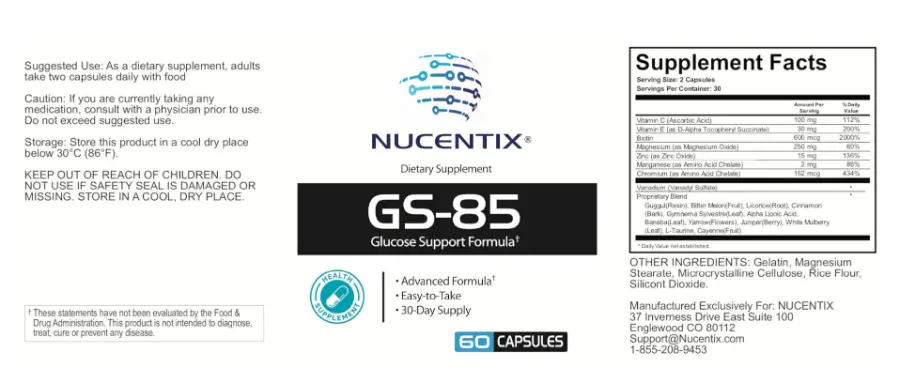
| How much | The adult Adequate Intake is about 30 mcg/day; supplements use more. GS-85 supplies 600 mcg (2000% DV) per serving. |
| On the label | Look for biotin measured in mcg and paired with chromium. A high %DV is normal because biotin is water-soluble. |
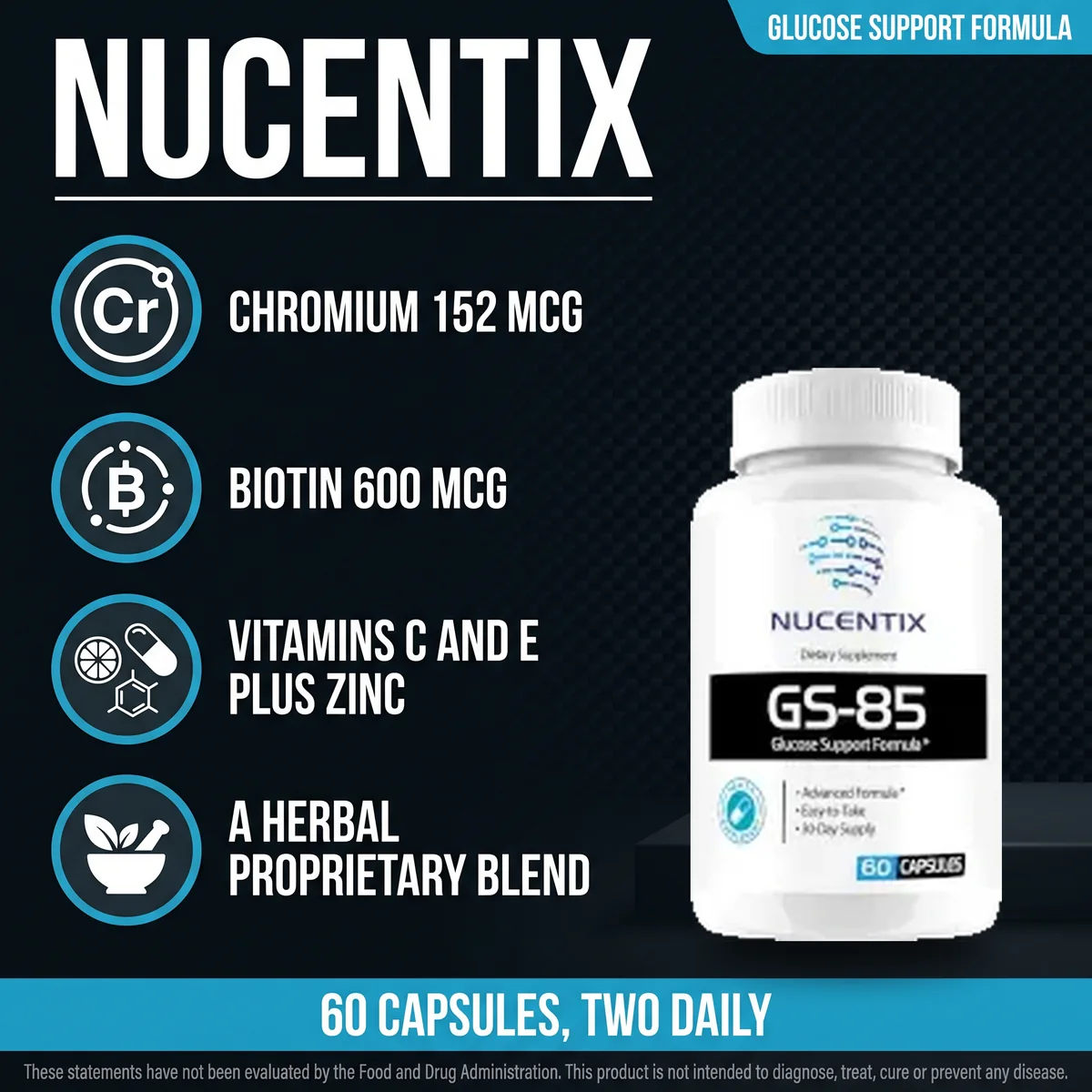
What does biotin do for blood sugar? In plain terms: biotin is a B-vitamin your body relies on to keep the everyday machinery of energy metabolism running — the same machinery that processes the carbohydrates on your plate. It is not a stimulant, a hormone, or a drug, and it will not undo a diet built on sugary drinks and refined snacks. But biotin is one of the most reliable supporting nutrients in the blood-sugar conversation, and it is the reason the vitamin sits right next to chromium on the front of so many glucose-support labels — including Nucentix GS-85. This guide explains what biotin actually is, the mechanism researchers believe it works through, how much you need, why it is almost always paired with chromium, and how to read the biotin line on a supplement label so you understand what that eye-catching percentage really means.
Biotin is a B-vitamin, not a botanical — here is what that means
Biotin goes by several names: vitamin B7, vitamin H, or simply biotin. Whatever you call it, it belongs to the family of water-soluble B-vitamins, which means two important things. First, your body does not store large reserves of it the way it stores fat-soluble vitamins like A, D, E and K — you top it up from food (and gut bacteria produce a little), and what you do not use tends to leave in urine. Second, because it dissolves in water and is not stockpiled, the body tolerates generous intakes well, which is part of why supplement doses can sit far above the basic dietary requirement without concern.
Unlike the botanicals you will see elsewhere in a glucose blend — cinnamon bark, gymnema, bitter melon — biotin is not a plant extract with a traditional-use history. It is an essential micronutrient with a defined, well-understood job in human biochemistry. That job is where its connection to blood sugar begins.
What does biotin do for blood sugar? The mechanism, in plain English
Here is the part most people actually want to understand. Biotin works as a coenzyme — a helper molecule that a handful of key enzymes cannot function without. The specific enzymes biotin serves are called carboxylases, and they sit at critical junctions in how your body handles fuel.
The carboxylase connection
Four biotin-dependent carboxylases do a lot of quiet, essential work: they help the body build and break down fatty acids, process certain amino acids, and manage the pathway that produces glucose when needed (gluconeogenesis). In other words, biotin is woven directly into the metabolism of all three macronutrients — carbohydrate, fat and protein. When a supplement label references “normal energy-yielding metabolism” or “normal macronutrient metabolism,” biotin is one of the nutrients that phrase is pointing to. It supports the smooth running of that system rather than acting on blood sugar directly like a medication would.
Why biotin and chromium are almost always together
If you scan glucose-support labels, you will notice biotin and chromium turn up as a pair again and again. That is not a coincidence or a marketing gimmick — it is a long-standing formulation convention. The two nutrients approach the same everyday goal from different directions: chromium is studied for supporting insulin’s signalling at the cell surface, while biotin keeps the enzymatic side of carbohydrate and fat metabolism ticking over. Combining them is a signal that a formula was designed around glucose metabolism rather than thrown together. If you want the full picture on the mineral half of that duo, our companion guide on what chromium does for blood sugar covers its mechanism, forms and dosing in detail.
To be precise and compliant here: biotin is studied in the context of normal metabolism and supporting healthy blood sugar that is already within a normal range. It is not a treatment for diabetes or any medical condition, and no responsible label should suggest otherwise. For the food-and-lifestyle side of the same story, see our guide on how to support healthy blood sugar naturally.
How much biotin do you actually need?
Because no widespread deficiency disease exists for biotin in healthy people eating a normal diet, authorities set an Adequate Intake (AI) rather than a full Recommended Dietary Allowance. For adults, that AI lands at roughly 30 micrograms per day, rising slightly for those who are breastfeeding. That modest amount is thought to cover basic nutritional needs, and most varied diets deliver it comfortably.
Supplements are a different story. Glucose-support formulas typically supply far more concentrated amounts because they aim at targeted, everyday support rather than merely filling a dietary gap. Nucentix GS-85 provides 600 mcg of biotin per two-capsule serving — 2000% of the Daily Value. If a number like 2000% makes you pause, do not let it: biotin is water-soluble and has an excellent safety record even at high supplemental levels, so no Tolerable Upper Intake Level has been established. The percentage looks dramatic only because the reference Daily Value itself is tiny. As always, if you take medication or manage a health condition, check any new supplement with your doctor first.
Biotin plus chromium, in two capsules
Nucentix GS-85 pairs 600 mcg of biotin with 152 mcg of chromium, vitamins C and E, zinc and a 12-herb glucose blend — a focused daily routine, backed by a 60-day guarantee.
See Nucentix GS-85 PackagesReading the biotin line: d-biotin, “high-potency” and %DV
Biotin is refreshingly simple to read on a label compared with minerals like chromium, which come in several competing forms. The biologically active form of biotin is d-biotin, and that is what reputable supplements use; there is not the same picolinate-versus-chelate debate you get with trace minerals. So when you scan the biotin line, you are really checking three things.
- ✓Is it measured in micrograms (mcg)? Biotin is dosed in mcg, not milligrams. Doses on glucose labels commonly range from a few hundred mcg up into the low thousands.
- ✓Is a high %DV present and normal? Because the Daily Value is only 30 mcg, even a moderate dose shows a big percentage. A high number is expected here, not a red flag.
- ✓Is it paired with chromium? The chromium-plus-biotin combination is the hallmark of a formula built around glucose metabolism rather than assembled at random.
For a broader walk-through of serving sizes, ingredient forms and proprietary blends, our dedicated guide on how to read a blood sugar supplement label shows you how the whole panel fits together.
Food sources of biotin — and who tends to run low
Biotin is present in a wide range of foods, which is why frank deficiency is uncommon. Egg yolks are one of the richest sources, along with organ meats such as liver, plus nuts, seeds, salmon, sweet potatoes and some legumes. A curious quirk: raw egg whites contain a protein called avidin that binds biotin and blocks its absorption, so people who eat large amounts of raw egg white over long periods can run low — cooking deactivates avidin and solves the problem.
A few other situations can nudge biotin needs upward or lower its status: pregnancy, long-term use of certain medications, heavy alcohol intake, and some inherited metabolic conditions. None of that is a diagnosis; it is simply context for why a measured daily dose appeals to many adults who want steady, everyday nutritional support without overhauling every meal at once.
One label caution worth knowing: biotin and lab tests
This is the single most practical thing to understand about supplemental biotin, and it has nothing to do with safety of the vitamin itself. Many modern laboratory tests use biotin-based technology behind the scenes, and high doses of biotin circulating in your blood can interfere with certain assays — including some thyroid hormone tests and the cardiac troponin test used to help assess chest pain. The interference can push results falsely high or falsely low depending on the test. The U.S. FDA has issued guidance to clinicians and patients about this. The takeaway is easy: tell your doctor about any biotin you take, and ask whether you should pause it for a day or two before scheduled blood work. It is a communication issue, not a reason to fear the nutrient.
Biotin is a team player, not a solo act
The most useful way to think about biotin is as part of a broader glucose-support strategy rather than a stand-alone fix. It works best stacked with the fundamentals — protein and fibre at meals, a short walk after eating, decent sleep — and alongside complementary actives. In Nucentix GS-85 it sits beside chromium and a 12-herb blend that includes gymnema sylvestre, the “sugar destroyer”, cinnamon bark and bitter melon, plus antioxidant support from alpha-lipoic acid, vitamin C and vitamin E. Each plays a different, complementary role, which is exactly what you want from a well-built formula — no single ingredient carrying the whole load.
If you are comparing products, remember that a big biotin percentage on its own tells you very little — almost every glucose formula can post an impressive biotin number cheaply. What matters is the company biotin keeps: an absorbable chromium form, a sensible pairing, recognised supporting botanicals, and an honest, fully disclosed serving. You can read the fine print with confidence once you know a 2000% biotin line is normal rather than remarkable.
Make biotin part of your daily routine
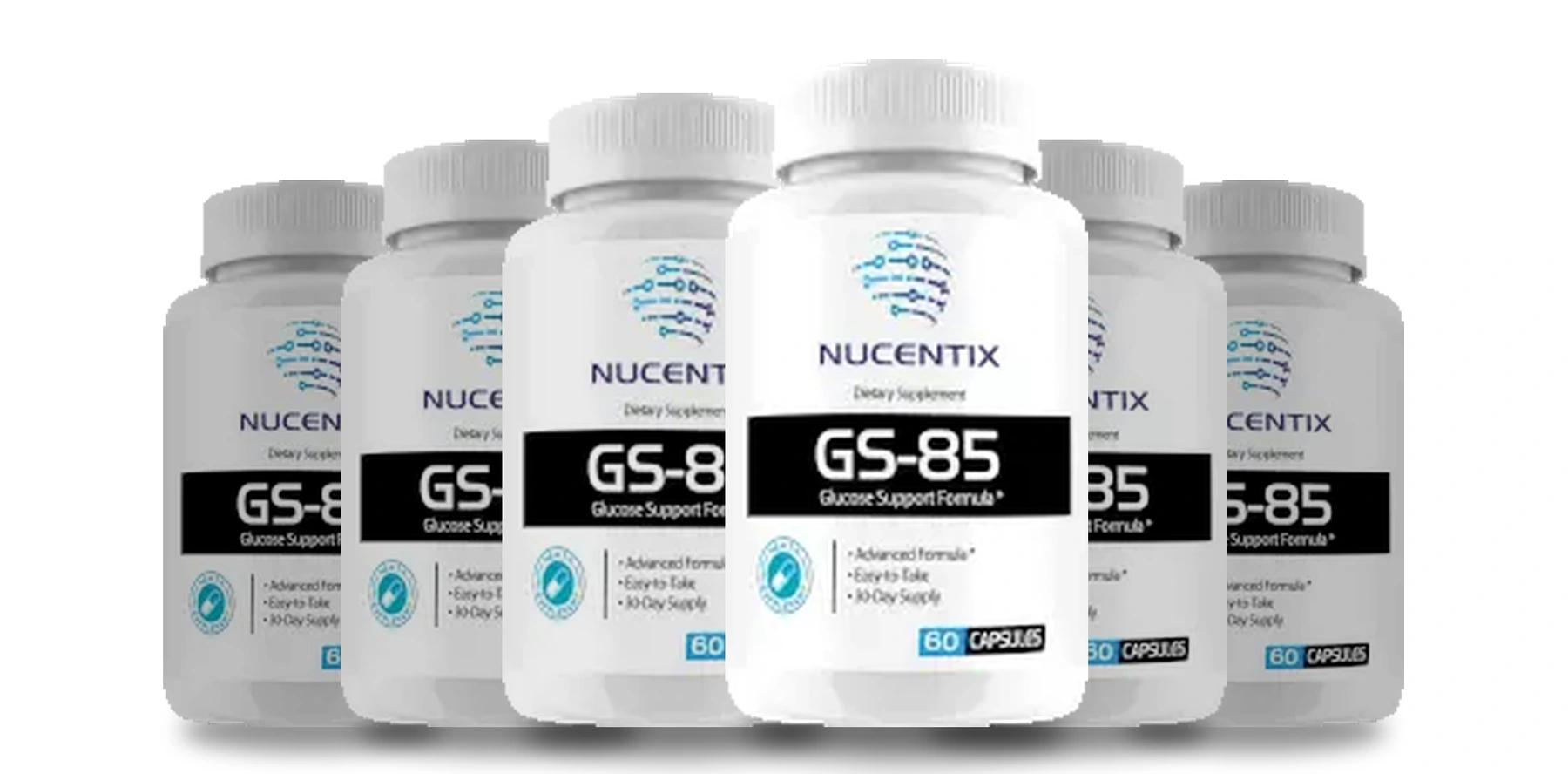
The 3-bottle and 6-bottle packages keep you consistent so you never pause mid-routine — the 6-bottle option is the best value and ships free in the U.S. Or see today’s pricing on the official store.
Order Nucentix GS-85† These statements have not been evaluated by the FDA. Nucentix GS-85 is not intended to diagnose, treat, cure or prevent any disease, and is not a treatment for diabetes. This article is for general information only and is not medical advice. If you have a medical condition or take medication, talk to your doctor before starting any supplement.
Frequently asked questions
What does biotin do for blood sugar?
Biotin is a water-soluble B-vitamin (vitamin B7) that acts as a coenzyme for the carboxylase enzymes involved in normal carbohydrate, fat and protein metabolism. Because those enzymes sit at the heart of how the body turns food into energy, biotin is a common companion to chromium in glucose-support formulas that aim to support healthy, everyday blood sugar already within a normal range.
How much biotin is in a blood sugar supplement?
The Adequate Intake for adults is about 30 micrograms a day, which a normal diet usually covers. Supplements are more concentrated: Nucentix GS-85, for example, provides 600 mcg of biotin per two-capsule serving, which is 2000% of the Daily Value. Biotin is water-soluble, so a high percentage on the label is normal and any excess is excreted in urine.
Why are chromium and biotin combined in one formula?
Both nutrients support the body’s normal handling of carbohydrates from different angles, so pairing them is a long-standing convention in glucose-support products. Seeing chromium and biotin listed together is usually a sign the formula was designed around glucose metabolism rather than assembled at random.
Can biotin affect my blood test results?
Yes. High-dose biotin can interfere with certain lab tests that use biotin-based technology, including some thyroid and cardiac troponin assays, potentially skewing results. The FDA has issued guidance on this. Tell your doctor about any biotin you take and ask whether to pause it before blood work.
Can I get enough biotin from food?
Biotin is found in egg yolks, organ meats, nuts, seeds, salmon and some vegetables, and outright deficiency is uncommon in healthy adults eating a varied diet. A measured dose in a supplement is popular mainly as steady, everyday insurance alongside chromium rather than to correct a deficiency.
References
1. National Institutes of Health, Office of Dietary Supplements — Biotin Fact Sheet for Health Professionals. ods.od.nih.gov/factsheets/Biotin-HealthProfessional
2. Oregon State University, Linus Pauling Institute, Micronutrient Information Center — Biotin. lpi.oregonstate.edu/mic/vitamins/biotin
3. U.S. Food & Drug Administration — Biotin Interference with Troponin Lab Tests: FDA Safety Communication. fda.gov — biotin lab-test interference
4. Harvard T.H. Chan School of Public Health, The Nutrition Source — B Vitamins. hsph.harvard.edu/nutritionsource/vitamins/vitamin-b
About the Nucentix Research Team
The Nucentix Research Team is an independent group of nutrition and wellness writers who review the science behind common blood-sugar ingredients and translate it into plain language. We read the primary sources, cite them openly, and keep our guidance general and traditional-use focused — never a substitute for personalised medical advice. Our aim is simple: help you become a sharper label-reader so your money goes toward formulas that are actually built to support healthy, everyday glucose metabolism.