Does Turmeric Help Blood Sugar? Curcumin, Absorption & Dose Guide
| What it is | Turmeric is the golden root spice; its main active is curcumin, a polyphenol from the curcuminoid family. |
| What it does for blood sugar | Curcumin is studied for antioxidant and anti-inflammatory support — helping the metabolic environment rather than lowering glucose directly. |
| How much | Culinary turmeric is only 2–5% curcumin; study doses use standardized extracts (often 95% curcuminoids), no official Daily Value. |
| On the label | Look for standardized curcumin/curcuminoids and an absorption aid such as black pepper (piperine) — curcumin absorbs poorly alone. |
Does turmeric help blood sugar? It is one of the most common questions in the natural-health space, and the honest answer starts by separating the spice from its active. Turmeric the root is mostly starch and fibre; the compound doing the interesting work is curcumin, a bright-yellow polyphenol that researchers have studied for decades. This guide explains what curcumin actually is, the mechanism that connects it to glucose metabolism, why absorption is the make-or-break issue with any turmeric product, and how to read it on a label. Because turmeric belongs to the same family of kitchen spices studied for metabolic wellness, it pairs naturally with our guides to berberine vs cinnamon and Ceylon vs Cassia cinnamon.
Turmeric vs curcumin: know the difference before you shop
This distinction is the single most useful thing to understand, because it explains why two “turmeric” products can be worlds apart. Turmeric is the whole dried root, ground into the familiar golden powder. Within it sits a group of compounds called curcuminoids, and the star curcuminoid is curcumin. Here is the catch: culinary turmeric is only about 2 to 5 percent curcumin by weight. So the turmeric in your curry contributes flavour, colour and a small amount of curcumin, but the concentrated effects studied in research come from standardized curcumin extracts that pack the curcuminoids into a far smaller, measured dose. When someone asks whether turmeric “works,” the real question is usually about curcumin, and at what dose.
Does turmeric help blood sugar? The mechanism, in plain English
Let us be precise and compliant here, because this is where marketing often overreaches. Curcumin is not studied as a glucose-lowering drug. Its reputation rests on two well-documented properties — it is an antioxidant and it supports a healthy inflammatory response — and those properties are relevant to the backdrop against which glucose metabolism happens.
The oxidative-stress and inflammation angle
Sluggish, less-responsive glucose handling tends to travel with a low-grade, simmering level of oxidative stress and inflammation in the body. Curcumin is one of the most-researched natural compounds for helping the body keep that simmer in check. By supporting a calmer, better-defended internal environment, curcumin is investigated as a complementary ingredient — one that helps the conditions in which healthy metabolism operates, rather than acting directly on blood sugar the way chromium or certain fibres do. This is the same supportive logic behind including antioxidants like vitamins C and E and alpha-lipoic acid in glucose formulas.
Why the evidence needs a caveat
Curcumin research is genuinely promising but also genuinely mixed, and a big reason is absorption. Many early studies used forms of curcumin the body barely absorbs, which muddies the results. That is not a reason to dismiss it — it is a reason to care intensely about the form on the label, which we come to next.
The absorption problem — and why black pepper shows up
Curcumin has a frustrating property: on its own, it is poorly absorbed, rapidly metabolised, and quickly cleared, so a lot of what you swallow never reaches your bloodstream in an active form. Supplement makers solve this in two main ways. The classic trick is to add a pinch of black pepper extract (piperine), which can increase curcumin absorption dramatically by slowing how fast the liver clears it. The more modern approach is a specially engineered high-absorption curcumin — formulated with phospholipids, oils or micronised particles — designed to get more curcumin across the gut. Either way, a turmeric product with no absorption strategy is largely wasting the curcumin it contains.
A blend that comes at glucose from every angle
Nucentix GS-85 combines a 12-herb botanical blend with chromium, biotin and antioxidant support — a two-capsule daily routine built to complement a turmeric-rich, anti-inflammatory way of eating, backed by a 60-day guarantee.
See Nucentix GS-85 PackagesHow much curcumin, and what to look for on a label
There is no Adequate Intake or Daily Value for turmeric or curcumin, because they are botanicals rather than essential nutrients. Study protocols vary, but concentrated curcumin extracts are commonly used in the range of several hundred milligrams up to about a gram or more of curcuminoids per day. Rather than chase a number in isolation, judge a turmeric product with these questions:
- ✓Is it standardized? Look for “standardized to 95% curcuminoids” or a stated curcumin amount — not just “turmeric root powder,” which is mostly not curcumin.
- ✓Is there an absorption aid? Black pepper / piperine, or a named high-absorption curcumin technology, tells you the formula was designed to actually deliver the active.
- ✓Is the amount disclosed? A clear milligram figure beats a vague “proprietary blend” that hides how much curcumin you are really getting.
- ✓Does it fit the rest of the formula? In a multi-ingredient product, turmeric is one supportive player among several — it does not need to be a mega-dose to earn its place.
These are the same instincts we apply to every panel; our full method lives in how to read a blood sugar supplement label.
Turmeric in the kitchen vs turmeric in a capsule
None of this means the turmeric in your cooking is pointless — far from it. Golden lattes, curries and roasted vegetables seasoned with turmeric are a delicious, low-effort way to nudge more of a well-studied polyphenol into your week, and cooking it in a little fat with black pepper is exactly the pairing that aids absorption. Think of culinary turmeric as a lovely everyday habit and a standardized extract as the concentrated, measured version for people who want a research-level dose. Both fit the food-first philosophy we champion in our guide to supporting healthy blood sugar naturally.
Build a routine you can stick with
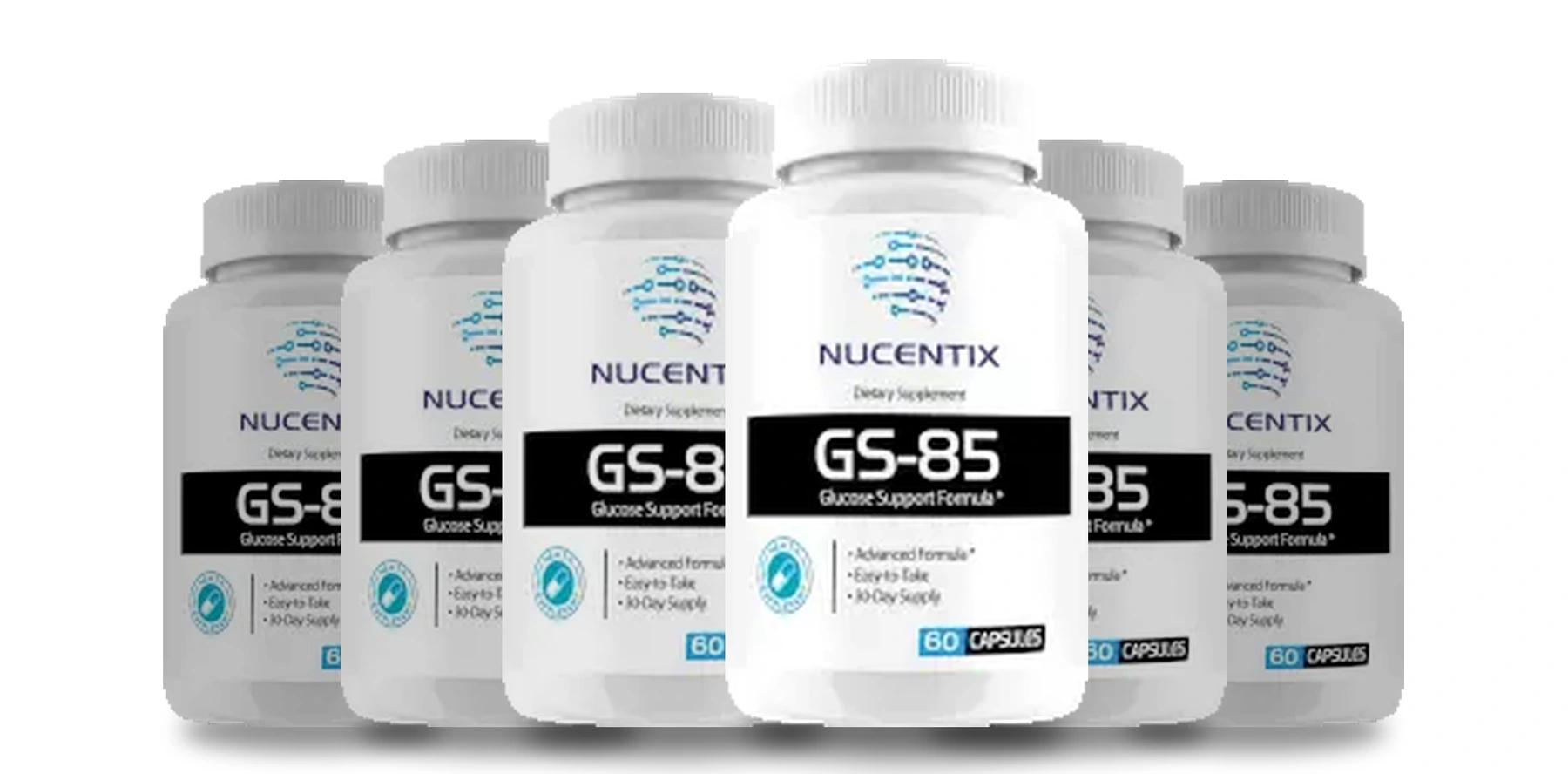
The 3-bottle and 6-bottle packages keep you consistent so you never pause mid-routine — the 6-bottle option is the best value and ships free in the U.S.
Order Nucentix GS-85† These statements have not been evaluated by the FDA. Nucentix GS-85 is not intended to diagnose, treat, cure or prevent any disease, and is not a treatment for diabetes. This article is for general information only and is not medical advice. If you have a medical condition, take medication, or are pregnant, talk to your doctor before starting any supplement.
Frequently asked questions
Does turmeric help blood sugar?
Turmeric’s activity comes mainly from curcumin, a polyphenol studied for its antioxidant and anti-inflammatory properties. Because low-grade oxidative stress and inflammation are part of the backdrop to sluggish glucose metabolism, curcumin is researched for supporting a healthy metabolic environment rather than for lowering blood sugar directly. It is a supportive, complementary ingredient, not a treatment.
How much turmeric or curcumin is typically used?
Culinary turmeric is only about two to five percent curcumin by weight, so study doses usually rely on concentrated curcumin extracts, often standardized to 95 percent curcuminoids and used in the range of several hundred milligrams to about a gram or more per day. There is no official Daily Value for turmeric or curcumin.
Why is black pepper added to turmeric supplements?
Curcumin is poorly absorbed on its own. Piperine, the active in black pepper, can dramatically increase how much curcumin reaches the bloodstream, which is why many turmeric supplements add a small amount of black pepper extract or use a specially formulated, high-absorption curcumin.
Is turmeric the same as cinnamon or the other blood sugar spices?
No. They are different spices with different actives. Turmeric works through curcumin, while cinnamon works through its own polyphenols and gymnema through gymnemic acids. They contribute in complementary ways, which is why blends often combine several rather than relying on one spice.
Does turmeric replace diet and exercise for blood sugar?
No. Turmeric is a supporting botanical, not a substitute for the fundamentals. Balanced meals, fibre, movement, sleep and stress management do the heavy lifting; curcumin and other actives are meant to complement those habits and support blood sugar that is already within a healthy range.
References
1. National Center for Complementary and Integrative Health (NIH) — Turmeric. nccih.nih.gov/health/turmeric
2. Oregon State University, Linus Pauling Institute, Micronutrient Information Center — Curcumin. lpi.oregonstate.edu/mic/dietary-factors/phytochemicals/curcumin
3. National Center for Biotechnology Information, StatPearls — Curcumin. ncbi.nlm.nih.gov/books/NBK555601
4. Harvard T.H. Chan School of Public Health, The Nutrition Source — Antioxidants. nutritionsource.hsph.harvard.edu/antioxidants
About the Nucentix Research Team
The Nucentix Research Team is an independent group of nutrition and wellness writers who review the science behind common blood-sugar ingredients and translate it into plain language. We read the primary sources, cite them openly, and keep our guidance general and traditional-use focused — never a substitute for personalised medical advice. Our aim is simple: help you become a sharper label-reader so your money goes toward formulas that are actually built to support healthy, everyday glucose metabolism.